"They've resurrected Sherlock so I think it would be a bit weird to resurrect Moriarty as well," says Scott when we meet. "It would be sort of Bobby Ewing in the shower." And so in January, when the cast reconvene in Cardiff, the Dublin-born actor won't be joining them. "I know absolutely nothing about the new episodes," he claims, as I fish for clues as to how exactly Holmes manages to fake his apparent suicide.
Unless, of course, he is lying and Jim Moriarty is going to make a surprise re-appearance – but then that would be to credit Scott with the deviousness of his slippery, shape-shifting character, and the two could not be more different. Scott is not without nervous energy (at one point his legs start jittering like a murder suspect being given the third degree), but he doesn't have Moriarty's febrile intensity (thank goodness). He's friendly and likeable, shy rather than sly – although a bit of an interviewer's nightmare with his habit of fading out midway through sentences.
Anyway, the upside of his departure from Sherlock is that, while the 'Cumberbitches' (as Benedict Cumberbatch's female admirers are charmingly known) have to wait at least a year until they see their heartthrob back on television, Scott's own band of followers ("They do have a name, but I keep forgetting it," he says with genuine frustration) need only wait till early next month to see their man on the small screen again.
In the three-part ITV1 drama The Town, he plays 30-year-old Mark, who, after 10 years in London, returns to his home town, 'Renton' (it was actually filmed in High Wycombe in Buckinghamshire), following a shocking family tragedy. I won't divulge more for fear of spoiling some early and nicely-worked surprises; suffice to say that Scott heads a cast that includes Julia McKenzie, Charlotte Riley, Gerard Kearns and Martin Clunes.
In any case, the most eye-catching element of The Town is that it is the first work for television of acclaimed playwright Mike Bartlett, who wrote the Chariots of Fire adaptation currently running in the West End. Scott and Bartlett's association goes back to the Royal Court, where Scott won the second of his two Laurence Olivier Awards in 2010 in Bartlett's Cock, playing a gay man angry and confused by the fact that his boyfriend (played by Ben Whishaw) has fallen in love with a woman.
"My interest in The Town was because of Mike," says Scott. "What I like about him is that he can do plays at the Royal Court and he can write drama that's accessible… he's not a snob in any way." In fact, raw material like this could have been fashioned into the sudsiest of melodrama, whereas Bartlett has crafted something fresh and intriguing.
After Sherlock he was offered endless variations on Moriarty-like super-villains. "It's absolutely to be expected," he says in his soft Irish accent (playing back my recording, he sounds just like Dylan Moran). "Everybody was so shocked that I would be playing a bad guy three years ago; now it's completely the opposite. One could increase one's profile by doing more and more of that stuff, but I've done a lot of different sorts of stuff without a lot of scrutiny and so I know what I want to do."
And one of those things, unexpectedly for such an intense screen presence, is comedy – it's a bit like hearing that Daniel Day-Lewis has just done a sitcom. I'm sure he'll be great, though, and Scott returns to his native Ireland next month to begin filming The Stag, written by his friend Peter McDonald, whose short film, Pentecost, was last year nominated for an Oscar. "It's about this guy – like a lot of guys – who doesn't want to have a stag party," says Scott, who visits Dublin regularly to see friends and family, but has never before been back to work.
Born in 1976, the middle child (his older sister is now a sports coach and his younger sister is a fledgling actress), his father, Jim, worked for a youth employment agency and his mother, Nora, was an art teacher – a talent passed on to her only son. "I draw and paint and all that stuff," says Scott. "I was going to go to art school, and I could have made a living. I mean, I won a bursary to educate myself in art – very strangely on the same day that I got cast in my first film, when I was 17. It was a very strange crossroads and I very definitely did choose [acting], so I have a perpetual sense of guilt about it."
Before that he attended a Jesuit boy's college in Dublin. "I feel very lucky to have gone to a Jesuit school actually because," he says, pausing and then exploding with laughter, "I could have been massively bullied if I didn't." Why? "Well, being a, I don't know, a sensitive chap… shy."
So shy, in fact, that at his 21st birthday he made a speech that "sounded like I was giving a eulogy at a funeral". The Jesuits, however, recognised and encouraged Scott's artistic nature. He joined the school theatre, and made a couple of TV commercials, as well as a movie debut (the 1995 Irish film Korea), before studying drama at Trinity College, Dublin – a degree he abandoned after six months ("I was in a semiotics lecture and the lecturer was saying 'When someone is beside us and they are rustling sweet wrappers – we call that noise'."). Instead, aged 18, he elected to learn on the job at the Abbey Theatre, Ireland's nationalf theatre, which was co-founded by WB Yeats, and where John Synge and Sean O'Casey premiered their respective classics The Playboy of the Western World and The Shadow of a Gunman. "It was incredible when I think of it now, playing proper, good parts."
That apprenticeship led to London, where he has lived for the past decade, assembling an impressive body of theatre work. He won his first Laurence Olivier award in A Girl in a Car with a Man at the Royal Court, making his Broadway debut opposite Julianne Moore in Sam Mendes' production of David Hare's The Vertical Hour (for which he was nominated for a New York theatre award) and in the 2010 Old Vic production of Noël Coward's Design for Living. Meanwhile, in 2009, the Olivier award-winning playwright Simon Stephens wrote a one-man show, Sea Wall, especially for Scott.
On screen, he had a small part in Spielberg's Band of Brothers, and then rather larger roles in the Bafta-winning Longitude and the acclaimed HBO history drama John Adams. He played a failed actor in The Hour, while his puppyish brown eyes lent themselves to an uncanny portrayal of Beatles-era Paul McCartney in the BBC John Lennon biopic Lennon Naked.
But it was with Jim Moriarty in Sherlock that Scott finally drew public attention. Has it changed things within the industry? "I think you definitely get the benefit of the doubt," he says. "To get really good parts executives need to go, 'Which guy is that? Oh it's the guy from that thing'. Any actor will tell you that you go for a job you're massively suitable for and they give it to someone who's got more of a selling point. That's a very dangerous thing – that's how exciting projects are totally destroyed by some miscast actor who's got a profile."
That profile now brings legions of fans (Scott still can't remember the collective name for them), who send him birthday presents and accost him in shops. "I was in Marks & Spencer and the cashier said, 'Hello, Mr Sex', which is nothing to do with me… Moriarty is called 'Mr Sex'. I went red as I'm going red now. I get a lot of 'Mr Sex', but it's better than being called 'Mr Fuckwit'.
"Then you get weird sex videos of me and Benedict doing these terrible bizarre things with each other. Someone's mashed them up and edited bits and things… Oh, I can't tell you… Every day I'm surprised by the imagination. Anyway, it's all a bit of fun… it's all a bit of fun. Some of it's creative and some of it's creepy. But for the most part fans aren't intrusive… For the most part they sort of know that I keep myself to myself."
Keeping himself to himself extends to not discussing his private life with journalists. "I feel protective of my private life," he says. "I'm in a relationship which I'm very proud of, but I don't want to talk about it because it's mine, you know. That's what I find difficult in an interview situation like this – it's a one-way street. There's any number of people in our culture today who will tell you absolutely everything about themselves but I'm not sure that works well for actors – just because you're pretending to be lots of people. If I think of the actors I really admire I don't know that much about them." In fact, the most I can get from Scott is that he lives in south-east London and that, "No, I don't have any pets".
Scott enjoys talking to his fans, and is happy when they are introduced to other aspects of his work – like the Chinese teenager who saw him seven times in the three-and-a-half hour Ibsen epic Emperor and Galilean at the National Theatre. "That's what's extraordinary is that Sherlock brings in certain people," he says. "I like it. Sometimes when I go to the theatre – you look around and you see a lot of middle-class, middle-aged people… that really bores me to death."
He is more ambivalent about Hollywood. "Actually this week I've just signed with a new American agent, so it does interest me," he says. "But a couple of years ago I did go over during the pilot season, I had a few meetings and I found it massively depressing. Things are sold to you as an opportunity, but an opportunity for what? There's an opportunity to be on television for seven years, but the actual day-to-day – and I think this is what people forget in this drive to go to Hollywood – the actual day-to-day, no matter how much money you're going to earn, is actually kind of valueless if you don't believe in the project.
"The culture over there is not about being discerning… I did an audition with girls in bikinis going for lawyer parts, with a blazer over the bikini. And there was one day when I went up for three different types of vet and you think, 'Even if this works out, it's a very dangerous road to go down'. Sometimes I think the people I've found most unhappy and difficult to work with as actors are people who are considered safe, because there's no outlet for them… they're [always] playing themselves."
And what would Scott playing himself be like? Is there any Moriarty in Scott? "There is a Moriarty in me," he says. "I do mean that… there is a dark side to me, although I am a good person, I hope. Meryl Streep, I think, said that just because someone doesn't look like the part, doesn't mean they aren't suitable for the part. It's much more about what the essence of someone is."
'The Town' begins on ITV1 on Wednesday 5 December


 VIEW GALLERY

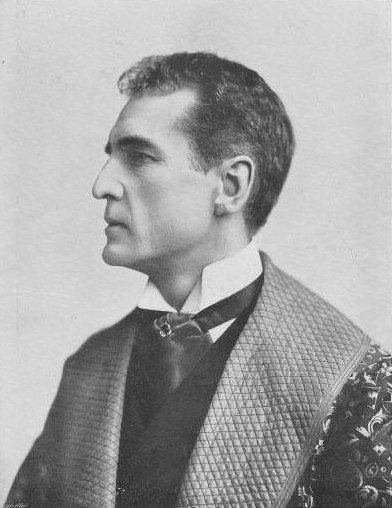 1. William Gillette. It can’t be underestimated what he did for the future of Sherlock Holmes. In a time when the detective actually had ceased to exist (because of that Reichenbach incident), he spread the word of Sherlock Holmes in the US and his 1899 play “Sherlock Holmes” went on to be a success in many of the European countries. He was also the one who made Moriarty into a really known supervillain and not just a character in one single short story. And when the Royal Shakespeare Company played Gillette’s “Sherlock Holmes” in 1974, it was the start of a new Holmes boom.
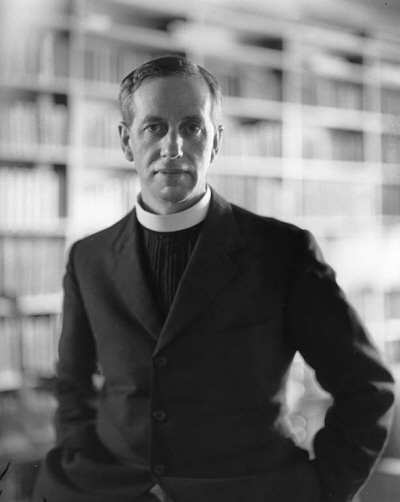 2. Ronald Knox. His 1911 essay “Studies in the Literature of Sherlock Holmes” started the world of Sherlockiana. He didn’t mean to do exactly that, he just wanted to do a satirical attack on the higher criticism of the Bible. Which is also the reason why Sherlockians e.g. use the word “Canon” when they talk about Conan Doyle’s Holmes stories.
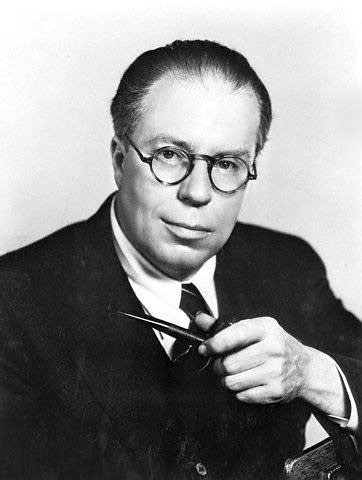 3. Christopher Morley. When he founded The Baker Street Irregulars in 1934, he formed the base for worldwide continued interest in Sherlock Holmes. Thanks to the many Sherlockian societies, people have had a chance to get together with a common interest, which among other things has stimulated the writing of a lot of books, both non-fiction and fiction. There had certainly been literary societies, but they had probably been concentrated on Conan Doyle, since such societies normally circle around the author.
 4. Basil Rathbone. It wasn’t Basil Rathbone’s decision to make the films in which he plays Sherlock Holmes, and maybe another actor could have played the detective. But the way Rathbone played Holmes made the detective even more an icon, for many years to come. From the ’40s to the mid ’80s this was what Sherlock Holmes looked like. And sounded – we should not forget all the radio plays!
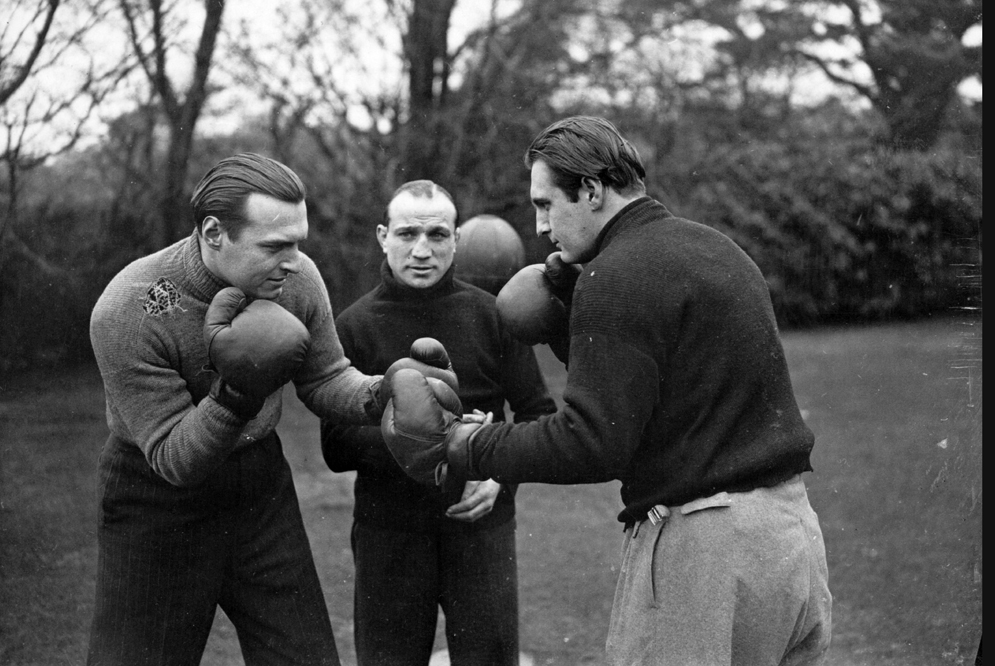 5. Adrian Conan Doyle & Denis Conan Doyle. Okay, I know they are two persons, but they together represent an era, when they ruled – or at least tried to rule – over everything Sherlockian. They made life difficult for pastiche writers and they decided who was to make Sherlock Holmes films and such. In their decisions they of course made many good things, but in guarding the copyright (and their own fortunes) they stopped a lot of interesting Sherlock Holmes projects.
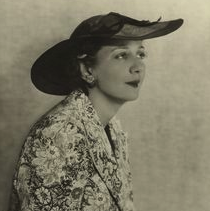 6. Princess Nina Mdivani Conan Doyle Harwood. The widow of Denis Conan Doyle. She really messed things up in the ’70s. I don’t know about all the legal things, but the copyright issues regarding the Sherlock Holmes stories became very complicated because of all her affairs. And regarding “princess” – well, she wasn’t really one, but that’s another story…
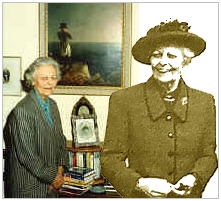 7. Dame Jean Conan Doyle. After Adrian Conan Doyle’s death in 1970, she was the only surviving child of Sir Arthur Conan Doyle. Her feelings towards the pastiches and film/tv productions were much warmer than the ones expressed by her brothers – even if she absolutely had opinions about certain books. She died in 1997. As Christopher Redmond put it in a tweet to me: She re-established a “Doyle estate” with some copyright control; encouraged the growth of ACD studies.
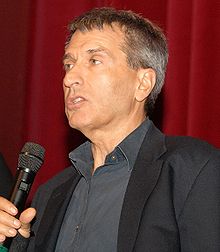 8. Nicholas Meyer. His 1974 book “The Seven-Per-Cent Solution” started the Sherlock Holmes pastiche boom – and he sold two million copies. His pastiche style was a new one – he was the one who started the tradition with an “editor” (i.e. the author himself) finding an old Watson manuscript. And he was also one of the first who let Holmes meet famous persons of the late 19th century and early 20th century.
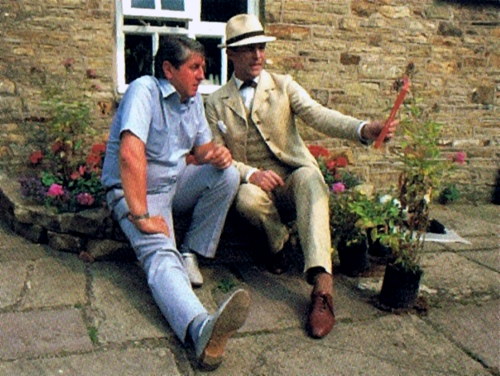 9. Michael Cox & Jeremy Brett. The Granada tv series about Sherlock Holmes was of course a team effort, and there were many more important persons in the production. But in the centre were the producer Michael Cox and the actor Jeremy Brett. And it’s impossible to separate Cox and Brett at this top 10 list. As Trevor Hancock wrote in a tweet to me: Brett was the heart, Cox the brain.
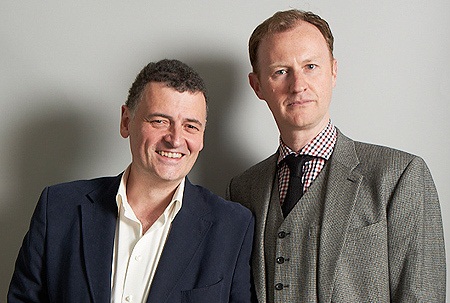 10. Steven Moffat & Mark Gatiss. Of course Benedict Cumberbatch and Martin Freeman are important – and absolutely essential – for the success of the BBC series “Sherlock”, but never before has the persons behind a Sherlock Holmes production been so much in focus. Which they absolutely deserve! They have reinvented the detective. Thanks to “Sherlock” there is a huge new interest in Sherlock Holmes, maybe bigger than ever before.

 Who’s this?


