
Showing posts with label Sherlockian connections. Show all posts
Showing posts with label Sherlockian connections. Show all posts
Friday, December 8, 2017
Patent date (it is always) 1895
“Here is the foresight,”
said he putting his finger upon the little disc
and loop of the hat-securer. “They are never sold
upon hats. If this man ordered one, it is a sign of a
certain amount of foresight, since he went out of his
way to take this precaution against the wind."


Wednesday, October 4, 2017

Thursday, January 26, 2017

Wednesday, June 22, 2016
Anyone know anything about any of these?
Four interlinked cases from the four decades of Sherlock Holmes’ long career…
One of the delights of dealing with a property such as Sherlock Holmes – compared with Doctor Whoor Blake’s 7 – must be the freedom to tell the stories you wish to tell, unhampered by constraints of licensors’ diktats (or “whims”, depending on who you listen to). As long as new stories respect what’s been set up by Sir Arthur Conan Doyle, then they can pretty much go anywhere – as Big Finish’s series has already proved.
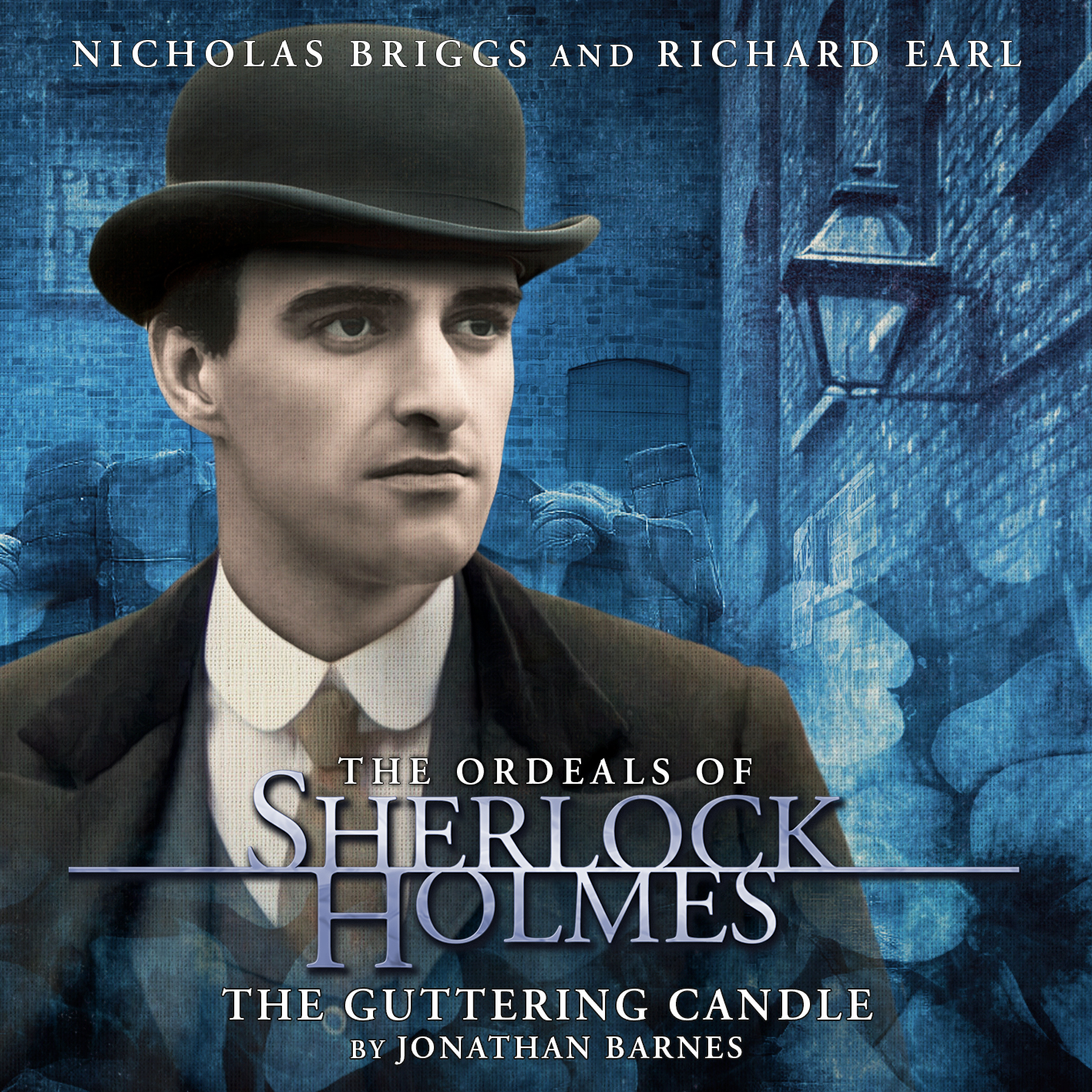 The Ordeals of Sherlock Holmes (and its companion piece The Adventure of the Perfidious Mariner) experiments with the formula of the Holmes story. The Guttering Candle, the first tale, is set before Holmes and Watson meet, so of necessity can’t use the standard format: it chronicles Holmes’ first meeting with Inspector Lestrade with those bits related as ordinary drama, while Watson is kidnapped while serving in Afghanistan, and records the story in his journal. This way, Jonathan Barnes shows us how much the pairing of the two men altered both of them, sometimes in less than obvious ways. Listen to this one very carefully!
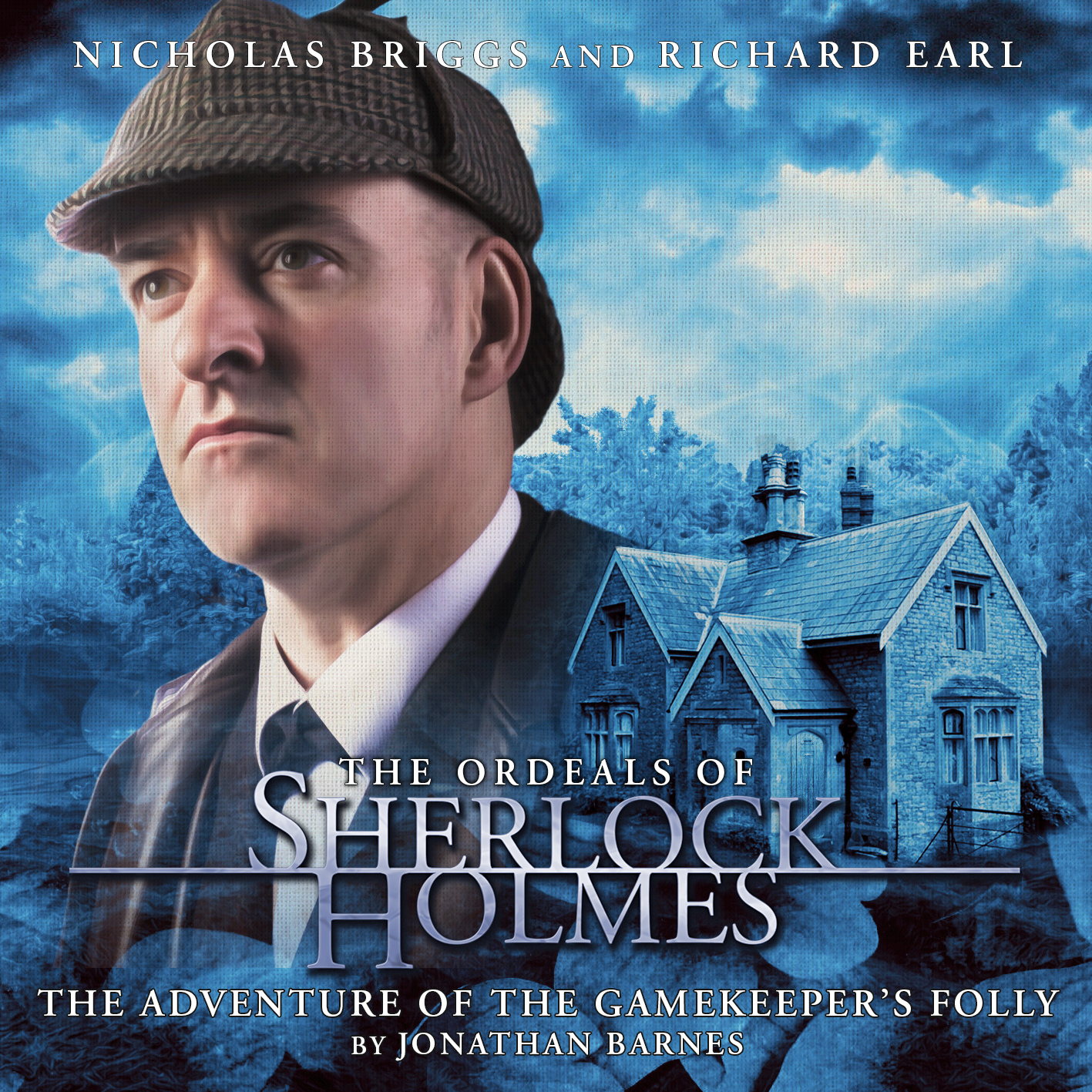 The Adventure of the Gamekeeper’s Folly is taken from the period when Holmes is apparently at the height of his powers, convinced of his own abilities, and prone to condescension. Barnes’ script addresses some of the complaints that have been levelled at the character over the years, and forces him to deal with the aftermath of his actions – and note the way in which Watson reacts to both Holmes’ original actions and their consequences. Watson is not an easy role to play, particularly when – as here – he is depicted in the way Doyle wrote him, rather than the “buffoon” of the Basil Rathbone era, and Richard Earl captures that blend of honesty, loyalty and deep affection which should characterise the doctor.
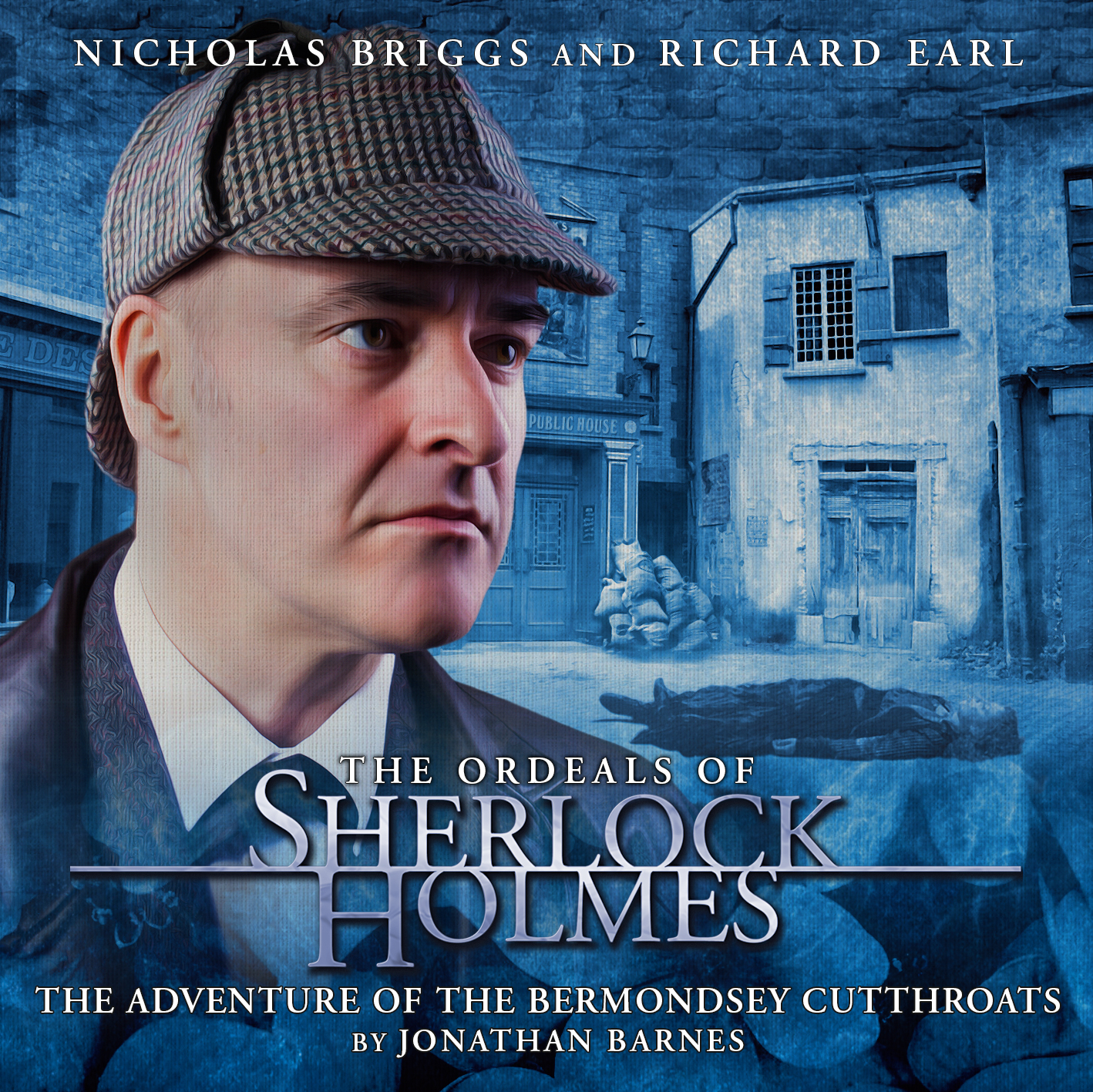 We jump to the start of the twentieth century for The Adventure of the Bermondsey Cutthroats, and one of the most disturbing sequences that Big Finish has put on audio – the pre-credits scene rivals the psychological terrors of the best serial killer stories, and the rest of the story maintains the level. This story provides an explanation for Holmes’ retirement from the profession, and also the fates of some of the supporting characters. Barnes is unafraid to show the detective not operating at his best, and in so doing explains why some of the contemporary updatings of the character over the years haven’t worked (the taunts from the villain about the telephone, for example).
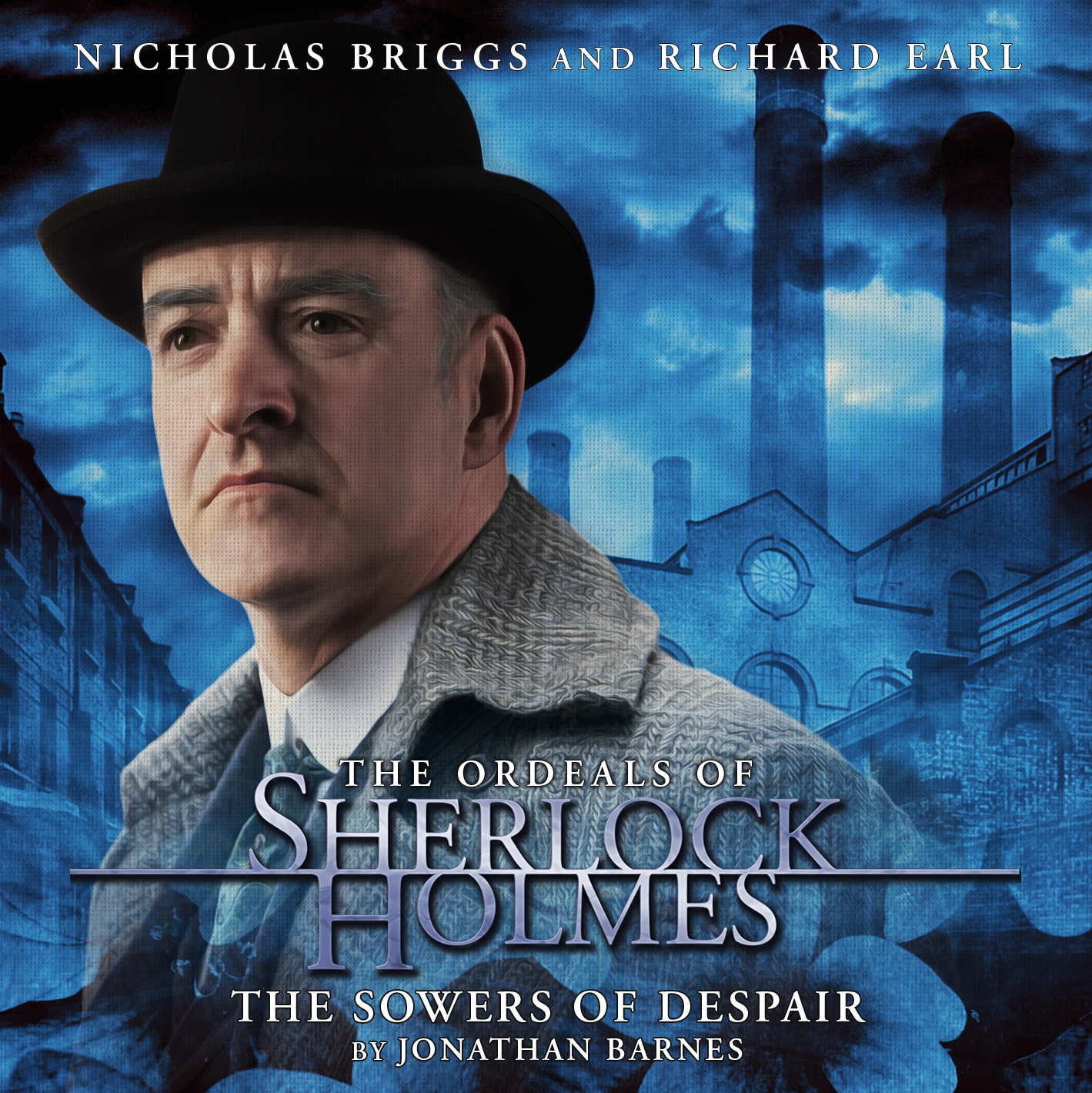 The set concludes with The Sowers of Despair, which ties together threads from the previous three stories. It’s narrated by Holmes himself, for reasons which he explains quickly, and although you start to wonder if Barnes is paying tribute to Agatha Christie’s Curtain, it goes in a very different direction. Those unfamiliar with The Adventure of the Perfidious Mariner are advised to listen to that before The Sowers, partly because it explains Holmes and Watson’s reunion following the events of The Bermondsey Cutthroats. To say too much more would spoil some great surprises.
The undoubted star of the set, though, is Briggs as Holmes, who moves from the brash young man of The Guttering Candle through the superbly confident consulting detective, to a man faced with the harsh consequences of his own actions – and finally to someone who, despite everything, still finds it hard to empathise properly with the rest of humanity (his diary entry about the discussions in the Watson household when he visits is ample proof of this), but is almost desperately needy for the company of his oldest friend. When you hear his explosion of “Enough!” in the third story (which I listened to shortly after hearing Briggs explaining that “The Doctor is regenerating” in his persona as the Voice of the Daleks™) you don’t need any visuals to know exactly how Holmes looks, and there are many other examples.
Ken Bentley maintains the pace throughout the stories, allowing them to breathe where they need to – contrast the account of the train journey to Norfolk with the dash to Bermondsey to prevent a tragedy – and has assembled a strong cast of actors who, where necessary, can age their voices as required by the scripts.
Verdict: A contrasting set of cases which will reward a second listen once the links have become clear, with Briggs and Earl now a definitive audio Holmes and Watson. 9/10
Paul Simpson
Tuesday, May 17, 2016
It's almost for sure a maybe. . . .
EXCLUSIVE: Downey Jr. confirms Sherlock Holmes 3 shooting this year

In an exclusive interview with ShortList, Robert Downey Jr. said he and director Guy Ritchie, who directed the first two instalments of Sherlock Holmes, would be starting work on a third film before the end of the year.
“We’re talking about it right now,” said the actor. "We can do some preliminary stuff.”
He admitted that their busy schedules caused the delay in following up 2011’s A Game of Shadows, which saw Holmes fake his death after a fight with his nemesis Moriarty.
“If we could shoot it on Skype, we could have the whole [movie] done in a week,” he admitted. “When we’re making those Sherlock movies it is off the hook. [So] we’ll attempt to make one this year. It really is a big deal to go and do those movies. I’m tired all the time, but I’m so excited about it."
The scampish star also let slip to ShortList he would be in the UK as part of the promotional tour for Captain America: Civil War, and was looking forward to discussing Holmes with Ritchie as part of his trip to London.
“He’ll say ‘I’ll meet you on my bike’, all that sort of macho stuff,” he said. “I’ve always considered riding a bike in London as taking your life in your own hands. Guy makes it look easy.”
Captain America: Civil War sees former allies Tony Stark and Steve Rogers come to blows over government plans to curb the Avengers’ vigilante behaviour by making them work for the UN. Trailers have shown the pair leading their own factions of Marvel characters – including Black Widow, Vision, Hawkeye and Falcon – into a huge battle.
Downey Jr. praised the new additions to the Marvel universe – including Chadwick Boseman as Black Panther and Tom Holland as Spider-man, saying “I have so much admiration for everybody.
“[Boseman] is a really big deal. Softly spoken, but extremely dynamic. And that takes nothing away from [Anthony] Mackie [The Falcon], who knows how to hold court.”
Are you ready for this?
Hey, remember how we told you the rather surprising news that basketball legend Kareem Abdul-Jabbar had written a novel about Sherlock Holmes’ brother Mycroft? Well, now he’s writing a comic about it. Featuring the sexiest Mycroft Holmes ever.
Here’s the full cover, bask in its glory:

If you’re wondering if I have questions about how the legendarily fat and sedentary Mycroft—whose club forbid talking—ended up being a bare-chested adventurer, you bet I do. They are “What?” “Why?” “What?” “No, really?” “How?” “Can someone help me understand?” and “What?”, in that order.
Monday, May 16, 2016

Monday, May 9, 2016
Houdini and Doyle, what can we expect. . . . .
This weekend I watched the first episode of Houdini and Doyle not knowing what to expect.
 The episode, and I am guessing the rest of the series will be like it, centers on a murder case that seems to center around spirits and ghosts.
With Houdini trying to prove it wasn't a supernatural killer and Doyle, of course, trying to prove it was. In between is a sensible female constable trying to prove herself in a mans world.
Doyle is of course irritated that the public is still crying for more Holmes while he is trying to prove he is capable of more than that.
Lots of Doyle connections are made throughout the show. Two of Doyles children are present in the household, as is Doyles first wife.
The most fun about the new show is the Victorian settings and costumes and the young female police constable played by Rebecca Liddiard. While women were still not present on the police force at this time, her character balances Doyle and Houdini. (Nor had Doyle and Houdini actually when this show is set.)(And the context of how much Doyle was involved with spiritualism at this period of time is a little off also.)
I think this will be a fun show, and much like Sherlock and Elementary it could become a game of catching as many Doyle and Sherlock Holmes references as one can.
I will let Doyleokian tell us how much is fact and how much is accurate.


With Houdini trying to prove it wasn't a supernatural killer and Doyle, of course, trying to prove it was. In between is a sensible female constable trying to prove herself in a mans world.
Doyle is of course irritated that the public is still crying for more Holmes while he is trying to prove he is capable of more than that.
Lots of Doyle connections are made throughout the show. Two of Doyles children are present in the household, as is Doyles first wife.
The most fun about the new show is the Victorian settings and costumes and the young female police constable played by Rebecca Liddiard. While women were still not present on the police force at this time, her character balances Doyle and Houdini. (Nor had Doyle and Houdini actually when this show is set.)(And the context of how much Doyle was involved with spiritualism at this period of time is a little off also.)
I think this will be a fun show, and much like Sherlock and Elementary it could become a game of catching as many Doyle and Sherlock Holmes references as one can.
I will let Doyleokian tell us how much is fact and how much is accurate.
Tuesday, May 3, 2016
A good question. . .
Would Sherlock Holmes be a coke addict today? It’s an interesting question
US opioid sales quadrupled from 1999-2010, but there can serious side effects even when taken as directed

Legions of Benedict Cumberbatch fans will be delighted with the news that filming has just got under way for the fourth Sherlock Holmesseries. Feature- length episodes are due to hit our screens in the autumn.
With a modern rather than a Victorian setting, the writers had to decide how to tackle the issue of Holmes’s addiction to cocaine and opium when the series began. Steven Moffat said: “I think you’d have to ask the question would a man like Sherlock Holmes be a coke addict today? In Victorian times everybody was taking some kind of drug, largely because there was no such thing as a painkiller. It is a very different thing to say that Sherlock Holmes is a coke addict now.”
It’s an interesting perspective. There has been an explosion in opiate prescribing, especially in North America. US opioid sales quadrupled between 1999 and 2010. This was in part a response to undertreatment of patients receiving palliative care and those with acute pain. However, opioid therapy for chronic musculoskeletal pain, including back pain, also grew substantially and disproportionately. And as US opioid sales quadrupled, admissions to substance misuse treatment programmes and opioid- related overdose deaths also increased fourfold.
Opiate prescribing dates back to Sir Thomas Sydenham, who, in the 1660s, promoted laudanum, a tincture of opium and alcohol. Sir William Osler, a famously cautious prescriber, called it “God’s own medicine”. For the first time doctors had access to a reliable painkiller, a sedative and, because of its tendency to constipate, a useful treatment for diarrhoea.
People bought opiates in much the same way as they buy paracetamol today: patented formulations such as Dover’s powder were kept in the kitchen cupboard. Godfrey’s Cordial or Street’s Infants’ Quietness not only reduced colic in infants but made it easier to sedate children. The intoxicant effects of opium were also appreciated – brewers added it to their products.
Opiates are compounds found naturally in the opium poppy plant Papaver somniferum. Heroin is perhaps the most famous opiate, but there are numerous derivatives including methadone, oxycodone and fentanyl.
Some experts rank heroin as the most addictive drug. It causes the level of dopamine in the brain’s reward system to increase by up to 200 per cent. In addition to being arguably the most addictive drug, heroin is dangerous, too, because the dose that can cause death is only five times greater than the dose required to experience a high.
By 2010, deaths related to prescription opioid overdose had reached 16,500 a year in the US, far exceeding deaths from cocaine or heroin. Deaths from prescription opioids have also increased in the UK. The Centres for Disease Control (CDC) reckon as many as one in four people receiving prescription opioids in a primary-care setting struggles with addiction.
Earlier this year the CDC issued a formal warning to doctors about opiate prescribing. Acknowledging the important role of opiates in relieving suffering for patients with active cancer or others in hospice or palliative care, it noted that “studies are not available to indicate whether opioids control chronic pain well when used long-term”.
In addition to the serious risks of addiction and overdose, the use of prescription opioids can have a number of side effects, even when taken as directed. These include: physical dependence (ie symptoms of withdrawal when the medication is stopped); increased sensitivity to pain; vomiting; drowsiness; itching and sweating; and depression.
No one likes being in chronic pain for months or more. But before you move to a prescribed opiate for non- malignant pain it’s important to discuss with your doctor all pain treatment options. Be open about past or current drug and alcohol use. And have a detailed discussion about the risks and benefits of taking prescription opioids.
The man who would be Holmes. . . . The Burmese Holmes
Nationalist writer Shwe U Daung adapted Sir Arthur Conan Doyle’s famous literary creation and transported him to Rangoon in the 1930s to espouse his political views.
By OLIVER SLOW | FRONTIER
It was London in the late 19th century and Dr Watson, the sidekick of famed detective Sherlock Holmes, was sitting at home by a fire, smoking a pipe and reading a novel.
Shortly before midnight, an excited Holmes arrived, asking for Watson’s help in “one of the strangest cases which ever perplexed a man’s brain”. He asked Watson to accompany him the next morning to Aldershot, a town on the outskirts of London.
Some decades later, and more than 5,000 miles away in Rangoon, Thein Maung was, like Watson, sitting at home reading when there was a knock at the door. A man entered and asked Thein Maung for his help in a case similar to that in which Holmes had sought Watson’s assistance. The next day they would travel together, not to Aldershot, but across the Bago River to Thanlyin (then Syriam).
The man at Thein Maung’s door was San Shar, a character based on Holmes who was created by the famous and prolific writer of crime fiction, Shwe U Daung.
Sherlock Holmes was the creation of Sir Arthur Conan Doyle and his fireside interruption of Watson occurs at the start ofA Crooked Man, in which the detective investigates the death of Colonel James Barclay. The police believe he was murdered by his wife, Nancy, but Holmes, using his famous deduction skills, establishes that Barclay died from shock at the sight of a former rival in love, Henry Wood, whom he thought he had ordered killed when they served together in the British Army in India.
Shwe U Daung’s version of the novel, A Strange Murder Case, is almost identical to Doyle’s story, except that it is set in Syriam and Rangoon in the 1930s. In the story, San Shar establishes that former military officer U Tin Pe died from shock at the sight of U Chit Maung. Tin Pe thought Chit Maung had died after he sent him on patrol when they served together at Myitkyina. Like Nancy Barclay, Tin Pe’s wife, Daw Mya Hnit, is cleared as a murder suspect when San Shar solves the case.
Doyle wrote four novels and 56 short stories about his most famous character, with most set in London between 1880 and 1914.
Shwe U Daung wrote nearly 170 novels between 1917 and 1961. “Many of them are adaptions of Doyle’s Sherlock Holmes stories, although some are not,” said Ms Yuri Takahashi, a Japanese academic who lives in Sydney.

Shwe U Daung attracted Takahashi’s interest when she was assigned to the Japanese embassy in Yangon in 1991 as a Myanmar language expert. The result was a monograph, The case-book of Mr San Shar: Burmese Society and Nationalist thought in the 1930s as seen in the Burmese Sherlock Holmes Stories, that Takahashi presented at an Asian studies conference in Melbourne in 2008.
As well as A Strange Murder Case others included An Indian Woman Hiding in Her House (an adaption of The Adventure of the Veiled Lodger, in which a woman is mauled by a lion while trying to have her husband killed), A Murder Case on Boundary Road (adapted from the original Holmes story A Study in Scarlet) and Kyaing the Cripple (adapted from The Man with the Twisted Lip).
“The character of San Shar is very important to Burmese people,” said writer Ko San Lin Tun, who has translated some of Shwe U Daung’s novels into English. “And the work of Shwe U Daung remains very influential for many of the writers who came later,” he said.
The stories were incredibly popular, but, in common with Doyle, Shwe U Daung grew tired of his best-known character and killed off San Shar in his adaption of The Final Problem, in which Holmes dies after plunging into Switzerland’s Reichenbach Falls during a fight with his nemesis, Dr Moriarty.
In Mr San Shar is Caught by the Villains’ Hands, the detective dies after falling into a waterfall in Shan State during a fight with his rival, Professor Tun Pe. He is described as “an incredibly talented Burmese man who was once a chemistry professor at Rangoon University, but because of misconduct he was dismissed and became a criminal mastermind in Rangoon”.
Shwe U Daung brought his character back to life in The Assassination of Mr San Shar, an adaption of The Empty House, in which Holmes reappears as a bookseller. In Shwe U Daung’s version, San Shar returns as a Buddhist hermit.
There were times when San Shar’s destiny differed from that of Holmes. In The Disappearance of Governmental Treaty,published in 1937 and an adaption of The Adventure of the Bruce-Partington Plans, San Shar discovers that a murder was committed by the younger brother of a Burmese official after he was approached by a rich Japanese businessman, Mr Kalawa.
In her monograph, Takahashi argues that this incident illustrates a distrust of the Japanese at the time when Tokyo was trying to enlist the support of Burmese nationalists, causing grave concern to the British.
At the end of the story, Holmes receives a gift from Queen Victoria, but no similar event occurs in Shwe U Daung’s version. “Shwe U Daung must have felt that receiving a gift from the British was no longer appropriate for a Burmese nationalist hero,” Takahashi wrote.
The 1930s were a time of heightened nationalism and anti-British sentiment in Burma.
“Shwe U Daung himself was a journalist and a nationalist,” said San Lin Tun. “It is strange then that his main character was an adaption of a British one,” he said.
Although Takahashi argues that Shwe U Daung was a nationalist, his views differed from those of the “Dobama Asiayone” (We Burmans Association), the main nationalist movement in the 1930s, which was predominantly Bamar.
A consistent theme throughout the San Shar stories is of the detective helping people regardless of race or religion. The Scorpion’s Traitor and A Murder Case on Boundary Road, are about the Indian victims of Indian gangs, and The Examination Paper shows a friendship between an old Bengali servant and a young Burmese student. San Shar was also commonly helped by a group of Indian boys, an adaption borrowed from Holmes’ famous “Baker Street Irregulars”.
Monday, April 18, 2016
Looking for a good read?
Finding Sherlock Holmes in Toronto
The Toronto Reference Public Library, like Rem Koolhaas’ Seattle Public Library, is architecture that makes library use a community activity, yet affords privacy, while showcasing the tremendous archives and resources available to all who visit the library. The library’s open yet futuristic interior design makes is so that no matter where you are in the library you can see the rest of it, and it’s impressive. However, I was not visiting the library for the architecture, instead I was there on a more arcane mission: I was in search of Sherlock Holmes, or to put it another way I was there to investigate the strange case of the Arthur Conan Doyle Collection at the library.
On the library’s fifth floor, among their special collections behind glass doors sits a complete room, one that seems transported from a Victorian home, book lined floor to ceiling shelves, a desk, benches to sit on, a high-backed chair and a mantel place – and it is all devoted to the works of Sir Arthur Conan Doyle. All of his works: his novels, his plays, his journalism, his non-fiction on subjects from spiritualism to true crime. And yes, much of it is devoted to Sherlock Holmes. Outside the room is a curved wall which, itself, houses first and other editions of Doyle’s Sherlock Holmes tales. Appropriately the Conan Doyle Collection has been referred to as “Room 221B.”
How this extensive and ever expanding collection of Doylesiana came to be is a story all its own. In 1969, the library acquired some 200 volumes from the estate of Toronto rare book collector Arthur Baillie, as well as over 1500 items from Harold Mortlake of London, England. The following year the Library acquired a vast trove of Sherlockian material from Toronto collector Judge S. Tepper Bigelow, as well as over 200 editions of Doyle’s Sherlock Holmes story, “The Sign of the Four” from American collector Nathan L. Bengis.

There are handsome slipped case first editions, and slip cased copies of the Strand, there are minutes of meetings of the Baker Street Irregulars, and the menus from their annual dinners, that are books and books about Doyle and his works, and Sherlock Holmes tales from every imaginable place, including Japan, (the work of Holmes expert Leslie Klinger is well represented). On the mantel place there is even a meerschaum pipe and a horn-handled magnifying glass with the inscription “Sherlock Holmes, 221B Baker Street, London”.

And here’s the thing, you are allowed to browse and handle any and all, no special gloves, no person looking over your shoulder, for as long as you like, as much you like. You can lose yourself in this amazing assembled collection of Conan Doyle. At most other places, you would see a selection of items behind class, and not really be able to explore the collection, and hold in your hands the originals the way you are here. All in all, it is quite delicious, an unexpected jewel, right there on the fifth floor of the remarkable Toronto Reference Library.
The collection can be seen during regular library hours, for more info visit the library website.
Friday, April 8, 2016
And while we are on the subject . . . .
A Female Sherlock Holmes? It Ought to Be Elementary!
Sherlock Holmes Has Been a Mouse and a Muppet, but Never a Woman?
Sherlock Holmes is one of the most beloved characters of the last 100+ years. From a media psychologists’ perspective, the love of all things Sherlock is no mystery at all. I consider Holmes a super hero. Sure, he doesn’t fly or wear tights. Rather, he’s a sort of intellectual superhero who saves the day, makes thing right and protects the people.
There are so many reasons to love Holmes. He’s so damned smart. He sees readily what other people miss. He’s discerning. He’s wise. When you watch or read Sherlock Holmes, part of you is enjoying the ride he takes you on, and part of you – admit it now – part of you wants to BE him.
I want to be Sherlock Holmes. But, wait! I forgot. I can’t be Sherlock Holmes. Because I’m a woman.
A Mouse or a Muppet? OK. A Woman? No Way!
Holmes has been played on the stage and screen so many times by so many people. Heck, he’s been stretched and squashed into the Great Mouse Detective and the Muppet’s Sherlock Hemlock and the Firesign Theatre’s Hemlock Stones. Now there’s an animated series in Japan called “Sherlock Gakuen.”
[BTW, the Japanese love Holmes. They have nicknames for the BBC Sherlock stars Benedict Cumberbatch and Martin Freeman. They call Benedict “Curly Fu” and Martin “Peanut”.]
Now, I know what you’re saying…but Lucy Liu! Yes, Lucy Liu plays the John Watson character on ABC’s Elementary. And that’s great!
So, answer me this. While we’ve watched so many boys and men play Sherlock Holmes from the West End to Hollywood, from the High School stage to the Saturday morning cartoon – and while there have been any number of animal and even alien Sherlocks – why not a female Sherlock Holmes?
Beyond that, if you tally up the percentage of female superheroes who play the lead and who are not depicted as inferior to the men or as sidekicks, girlfriends or other supporting roles -- you’ll see that the women who get to suit up and show up are in the minority still by a pretty wide margin.
Oh, Who Cares?
You may ask, “Oh, come on! Who cares?” Some people say that nothing we see on screens matters at all – that it is merely entertainment and therefore is completely unrelated to how we think and feel. Maybe it would make us feel more comfortable about our choices if this were true. But the research tells us that it does matter what stories our culture tells us about girls and women.
For Our Daughters
When you take your little girl to the movies and time after time, the hero is a boy, it tells her that she can never be the hero of the story. It tells her that boys are in charge and that the best she can hope for is to play a supporting role. It tells her she’s “less than” --that she’s a second-class citizen.
When I was a little girl, most of the heros I read about and watched were boys and men. I had really hoped that by the time I had a daughter, this would be a laughable thing of the past. With all the strides we’ve made towards equality, how can we sit here in 2015 and still be facing this kind of underrepresentation? The kind of disrespect through marginalization and stereotypical representation?
The glimmer of hope I feel right now is that there seems to be a ground swell of movement among those of us who have had enough of the old school rules and who want something better for their daughters. Currently, for example, in the comic books, Thor is a woman. There are lively conversations about Black Widow and her depiction in theAvengers movies. There are some good female lead roles for detectives such as onBones or Veronica Mars. We're showing our little girls that a woman can run for president and maybe even win. Can't she win on the screen and on the page as well?

Is it time for a woman to play Sherlock Holmes? Heck, yeah! Where can I find a female Holmes – someone who is not afraid to be the smartest woman – the smartest person – in the room? Someone who’s ready to take on criminals andstereotypes too? Someone who wants more out of life than to be relegated to the supporting cast?
Well, I know where you can find her. If you, like me, hungered for a girl Sherlock. A girlock? If you hungered for…Herlock. Well, she’s ready for you to check her out. A year ago, I gave this idea to my husband, playwright and screenwriter Lee Shackleford (who starred as Holmes off Broadway in a play he also wrote called Holmes & Watson). Lee wrote the script for a TV pilot with a female Holmes and Watson. . Then he teamed up with his Hollywood colleague David Duncan who found us our actresses – Gia Mora as Sheridan Hume (get it?) and Alana Jordan as Jonny Watts.
Click here: http://www.herlock.us if you want to watch our pilot for free. And if you like what you see, join the movement to bring Herlock to life again. And thank you…for my daughter and for yours.
This blog entry is dedicated to my daughter, Regan Sophia, and her friends.

Wednesday, March 30, 2016
Goodbye Goldenrod. . . Our Sherlockian connection.
Twenty plus years ago we held the first two ever St Louis area Sherlock Holmes conventions on the Goldenrod Showboat in St. Charles Mo.
The Victorian atmosphere of the hundred plus year old boat made for a wonderful hosting spot.
We called the conventions 'The Games Afloat'.
 For over fifty years the Goldenrod served St Louis, then moving to St Charles in the late 80's.
 Never capable of moving under its own power, the Goldenrod would be pushed from location to location.
My first experience on the Goldenrod was in about 1981, when it was still in St Louis.
And it happened to be a vaudevillian production of Gillette's play about Sherlock Holmes.
While in St Charles, because of river conditions, the boat became to expensive to maintain once again, especailly since St Charles had already sunk a fortune in to it. It needed more repairs than St Charles thought they could handle.
The city eventually sold it and for many years it was hoped it would find a new home and keep offering entertainment.
For about the last ten plus years it has sat on the Illinois River near Kampsville awaiting its fate.
To save it from the salvage yard a group of volunteers had been trying to raise enough money to save it.
The floods of summer of 2015 put an end to that hope, damaging the boat beyond repair.
 The task then became saving as much of the historical interior as they could, hoping some day a museum would house the memories.
Many of the volunteers have worked hundreds of hours making this last hope happen.
 Tomorrow the volunteers will finally say goodbye to the old showboat.
They have removed as much as they can.
I am glad to have had some great memories of the old girl, and like many will miss the history of the old showboats and its connection to our local world of Sherlock Holmes.
I at least got to direct (a convention) on the old showboat a couple of times.


The Victorian atmosphere of the hundred plus year old boat made for a wonderful hosting spot.
We called the conventions 'The Games Afloat'.


My first experience on the Goldenrod was in about 1981, when it was still in St Louis.
And it happened to be a vaudevillian production of Gillette's play about Sherlock Holmes.
While in St Charles, because of river conditions, the boat became to expensive to maintain once again, especailly since St Charles had already sunk a fortune in to it. It needed more repairs than St Charles thought they could handle.
The city eventually sold it and for many years it was hoped it would find a new home and keep offering entertainment.
For about the last ten plus years it has sat on the Illinois River near Kampsville awaiting its fate.
To save it from the salvage yard a group of volunteers had been trying to raise enough money to save it.
The floods of summer of 2015 put an end to that hope, damaging the boat beyond repair.

Many of the volunteers have worked hundreds of hours making this last hope happen.

They have removed as much as they can.
I am glad to have had some great memories of the old girl, and like many will miss the history of the old showboats and its connection to our local world of Sherlock Holmes.
I at least got to direct (a convention) on the old showboat a couple of times.


Friday, February 19, 2016
A delightful Sherlockian surprise - 'Cottage to Let'

Filmed in 1941, set in Scotland, a mystery/comedy spy intrique set on an estate with, as the title claims, a 'cottage to let'.
Early John Mills and an always excelletn Alastair Sims, along with a 15 year old George Cole carry the film.
Watch it to catch the Sherlockian connections.
Tuesday, September 22, 2015
Arthur and George, first impressions. . . .

I must admit that I went into expecting to have to change the characters names, at least mentally, from Arthur and Alfred to Holmes and Watson.
I half expected the presentation to be another story about the great detective, just with different names.
I was pleasantly surprised that turned out not to be the case.
I am sure plenty of artistic license was taken with both the story and the individuals portrayed, but, unless you must have your historical dramas completly accurate, it didn't seem to detract from the entertainment value of the show.
Just like Holmes we all have an image of how Doyle should be portrayed. Unlike Holmes, we actually do know what Doyle looked like at the time this part of his life took place.
That however doesn't take away for the excellent job Martin Clunes is doing with the portrayal of Doyle. He is convincing as Doyle during this time period and is fun to watch without making the portrayal seem like an attempt at Holmes.
Although I have no idea what Alfred Wood looked like or how he was, I do feel Charles Edwards is doing well with the character and makes him very likeable
Arsher Ali is probably playing George a little less ethnically than the real Edalji's picture would suggest, but, so far, is doing a good job in the roll.
The sets, as always with a Masterpiece presentation, are excellent, as are the costumes.
A major compliment I can give the production is; If it were not for references within the show of Doyle being the creator of Sherlock Holmes you would forget there was a Sherlockian connection. And I see that as good if you were expecting a non-Sherlockian story. You forget, when allowed, about Holmes, and just sit back and enjoy the story.
Like many such shows, the recording of history and known facts does not allow for stories like this to be complelty accurate, which is a shame. It did however force the judical system of the time to be changed, and that is good.
I am looking forward to the other episodes.
Thursday, August 27, 2015
An elder Mr Holmes?

WHY HAVEN’T WE CRACKED the case of Sherlock Holmes? By now, the evidence stacks deep. But more than 130 years after a young doctor scrawled notes for a novel provisionally titled A Tangled Skein, the “Great Detective” (Arthur Conan Doyle, mercifully, reconsidered the branding for A Study in Scarlet) continues to elude any final verdict.
The latest chapter in the adventure of the deathless detective comes in the form of Mr. Holmes, the exactingly crafted new film from director Bill Condon, based on Mitch Cullin’s novel A Slight Trick of the Mind. As a 90-something Holmes sliding into dementia, Ian McKellen alternates from regal to shattered as his Sherlock struggles to reconstruct his bygone final case, sometimes meandering, sometimes flashing the rapier acuity of old. In flashback, a mature but still in-form Holmes performs the original investigation, aware of and wryly amused by his own celebrity. McKellen’s double-layered performance and the film itself refresh an illuminating tradition in the larger Sherlockian phenomenon: Old Holmes.
As I researched my recent book The Great Detective, an examination into the history of Sherlock Holmes in popular culture, I was struck by the degree to which Conan Doyle’s creation belongs to others as much as to him. Long before the post-meta-everything fan fiction milieu took over, Sherlock Holmes evolved as a boundless collaborative project, with many hands molding critical components of the mythos. The actor William Gillette, for example, helped enshrine “Elementary, my dear Watson” as the detective’s motto; illustrator Sidney Paget welded Holmes to his deerstalker. The character thrived because so many people grabbed this and that from Conan Doyle and made it their own. And yet, paradoxically, Holmes remains Conan Doyle’s creature, too — essentially of the author, but not wholly by him any more.
So it is with Old Holmes: the idea of the detective in his retirement, even dotage, aged far beyond the Victorian era of his canonical adventures. Many have taken their crack. At this point, with literally millions of fan-fiction stories adrift on the Internet’s high seas and uncounted thousands of more conventional pastiches and parodies gathering dust in collectors’ libraries and used bookshops, there have been innumerable extra-Conan Doyle versions of retired Sherlock Holmes. A quick consultation of amateur fan-fiction websites like Archive of Our Own reveals “Retirementlock” as a healthy subgenre within a vast literary sub rosa.
But like all things Sherlockian, Old Holmes starts with Conan Doyle himself. In 1905, in the espionage yarn “The Adventure of the Second Stain,” the author let Watson slip in a curious aside: the detective had retired from Baker Street to the Sussex Downs to keep bees. It’s worth noting that within the 60-story Sherlockian corpus, this story ends the 13 tales collected as The Return of Sherlock Holmes — the moment when Conan Doyle found himself financially obliged to resuscitate Sherlock, whom he’d killed off a decade before. The author always found Holmes’s wild popularity both inconvenient and irresistible; it obscured his other work, of which there was a lot, but also funded his existence, which was extravagantly expensive. So while the Returnsummoned a welcome small fortune — the initial US magazine fees alone ran to more than $1 million in today’s funds — Conan Doyle remained eager to sweep Sherlock offstage. Retirement, perhaps, seemed a better investment on future returns than murder.
During World War I, Conan Doyle produced “His Last Bow,” a single-act propaganda number featuring a disguised Holmes and delightfully obvious Watson operating against a German spy ring. Set in August 1914, it ends the Sherlockian chronology created by Conan Doyle. Famed for an elegiac speech by Holmes — “Stand with me here upon the terrace, for it may be the last quiet talk we shall ever have” — the story is a rare bird: narrated in third person, rather than by Watson, and Conan Doyle’s only attempt at showing the duo in action in their later years. The formula may have struck the author as commercially implausible: did readers, as the Teens roared into the Twenties, really want to see the 60- or 70-something old boys of Baker Street tootling around an automotive Britain, tut-tutting the decline in commissionaire’s service? After “His Last Bow,” when he did condescend to write the occasional Holmes story, an aging Conan Doyle generally opted for nostalgia pieces set in the detective’s classical period.
The one exception presents the remainder of what we “know” about Holmes’s retirement. In “The Adventure of the Lion’s Mane,” Conan Doyle makes a solo Sherlock his narrator of a seaside mystery, with no Watson in sight. Set long before the events of “His Last Bow,” the story is bland and unremarkable. Along with Sherlock’s one other outing as narrator, “The Adventure of the Blanched Solider,” it suffers a dubious reputation among serious Holmes fans as one of the saga’s lowest artistic moments. Without the humanizing, energizing filter of Watson’s narration, the retired Holmes fails to engage the imagination in the old way. It turns out that even a true detective is boring without a sidekick. Besides, the villain is a jellyfish.
Still, as with other stories collected in 1927’s valedictory Casebook of Sherlock Holmes, this excursion to Holmes’s Sussex apiary shows Conan Doyle seeking — half-heartedly, at times, but with an occasional glimmer of creative curiosity — to reboot Sherlock. (By 1926, the year he published “Lion’s Mane,” he’d lived with Holmes for exactly 40 years.) That this particular effort fails points to a pair of problems that all Old Holmes iterations must confront.
First, what does Holmes look like — what does the Sherlockian milieu amount to — when excised from London? A simple cottage on the Sussex Downs no doubt has its attractions. All the honey you could eat, one imagines. Still, the setting does not exactly fire the engines of intrigue like 221B, wreathed in London fog and decorated by Sherlock’s interior revolver practice. Apart from the swarm of metropolitan humanity, Holmes runs the risk of seeming like a creature in a poorly equipped zoo.
Second, where’s Watson? Holmes without Watson is a heartbreaking prospect. In Conan Doyle’s two attempts, the doctor’s absence deprives the whole scene of its animating warmth. And yet it seems impossible to imagine Watson, committed clubman and devoted husband to an unknown multiple of wives (one at a time), uprooting himself to the provinces. So who serves as Holmes’s mandatory foil?
The approaches have varied. In Mr. Holmes and its source novel, the elderly detective acquires a new counterpart in the form of a bright young boy named Roger. In The Final Solution, a 2004 novella by noted Sherlock Holmes addict (among other things) Michael Chabon, a character known only as “the old man” encounters a young German-Jewish refugee in 1944, and then a police inspector who recruits him into various minor mysteries with vast, horrifying implications.
As in Chabon, leaving the detective’s identity vague is an established strategy for dealing with Old Holmes — and, again, owes to Conan Doyle, who occasionally included lightly veiled, nameless references to the detective in non-Sherlockian short stories. In a 1941 genre classic titled A Taste For Honey(and a pair of subsequent, lesser-known novels), Gerald Heard, writing as HF Heard, created a certain “Mr. Mycroft,” an unmistakable Sherlock given his brother’s name for reasons perhaps equally artistic and copyright-related. Mr. Mycroft’s counterpart, a local honey enthusiast, fulfills the Watsonian role.
Leaving Holmes completely on his own, staring at the bees, seems the only truly unworkable formula. Perhaps the most durable — and arguably most successful, and definitely most heretical — solution comes from Laurie King, author of the successful series of Mary Russell mysteries. Young Miss Russell, an early-century proto-feminist, is Sherlock Holmes’s wife. Beginning in 1915, just after the chronological end of Conan Doyle’s canon, the dozen Russell novels so far send Mary and Sherlock through the inter-war world, from Jerusalem to India to San Francisco. (And thus, King merges two of the most popular Sherlockian pastiche formats, Old Holmes and “Sherlock Goes to ______________.”)
When I interviewed her for The Great Detective, King shed some perceptive light on the attraction and narrative possibilities of Old Holmes, and by extension the enduring intrigue the Baker Street investigator holds for creators of fiction in many media. “Arthur Conan Doyle opens many doors that he never explored himself,” King told me. “Conan Doyle could not envision Sherlock Holmes after the war. As far as he was concerned, the world had no place for that kind of mind any longer. Mary Russell is the young, female, early 20th-century-feminist version of Sherlock Holmes’s mind, and to begin with, I was primarily interested in her […] But once I paired Russell with Holmes, I began to see his possibilities.”
Possibilities: here King hits on why Old Holmes and the rest of the Sherlockian phenomenon persist. In his 60 stories, Conan Doyle layered on the detail — the devoted Holmesian knows more than she ever wanted to about possible Victorian monograph subjects — but, somehow, left vast stretches of canvas blank. This is, in fact, the accidental artistic brilliance of the Holmes tales: they encompass a robust but tantalizingly unfinished fictional world. Intriguing characters drift in and out of Conan Doyle’s texts in a page or two: Mycroft, the smarter older brother; Moriarty, the evil mathematician; Irene Adler, the femme fatale who beats Sherlock Holmes. Watson constantly teases us, name-dropping incidents and adventures so terrible, not even he can reveal them. (Let us raise a glass to the politician, the lighthouse, and the trained cormorant; to poor Isadora Persano, rendered catatonic by a worm unknown to science; and to the Giant Rat of Sumatra, definitely capitalized.) The canon’s internal chronology is just nonsensical enough to make just about anything possible. Ever since — and, indeed, well before — Conan Doyle laid down his pen, others have tried to fill in these gaps.
Old Holmes, and what might have befallen the great detective during his apparently permanent vacation on the Sussex Downs, represents one of the most inviting gaps of all, the ne plus ultra of the ingenious authorial negligence that helped Sherlock Holmes become not just one writer’s character, but a mass-made myth.
“Because I started in 1915,” Laurie King told me, “I could do whatever I wanted with him, because at that point Conan Doyle is done with him.”
¤
Subscribe to:
Posts (Atom)