
Showing posts with label discussion. Show all posts
Showing posts with label discussion. Show all posts
Friday, April 17, 2020


Monday, April 13, 2020
The Problem of Thor Bridge
The next meeting of the Harpooners of the Sea Unicorn, whether it be an attended meeting at our local meeting place or another online, the discussion will be about THOR.
I just reread the story and found it to be one of my favorites, again.
Much has been discussed over the years about THOR, including the condition that caused the victim to kill herself.
The line that jumped out at me in this reading was;
"I produced it from my hip-pocket, a short, handy, but very serviceable little weapon. "
Much discussion has been centered around the weapon or weapons Holmes and Watson may have carried, starting with the very first story when Watson said; '"I keep a bull pup."
Many agree that Watson probably also had a service revolver from his military days which probably would have been larger than the 'bull pup', (if you believe he meant a gun by that statement) and probably, in my opinion, not the one carried in THOR.
Below are a couple of links of other people thoughts on weapons in the Canon. Enjoy.

http://coastconfan.blogspot.com/2014/08/john-hamish-watson-md-or-mystery-of.html
https://simanaitissays.com/2015/05/15/firearms-of-the-holmesian-canon/
https://forums.gunboards.com/showthread.php?281503-Dr-Watson-s-quot-Service-Revolver-quot-in-Sherlock-Holmes-Books
Friday, April 10, 2020
Trusting Watson . . . . .
As I mentioned in the previous post, I had a discussion with another Facebooker and he made a comment about never really trusting Watson.
I found that pretty strange, especially, Playing the Game.
If you don't 'trust' Watson, at what point do you start in your study of the Canon.
That is not to say Watson, intentionally or unintentionally never made errors or mistakes.
But to not trust him, to me, almost makes Playing the Game pointless.
Because at that point you really can't believe anything in the Canon is a reliable place to start.
Not trusting Watson means; Can you really believe he was in Afghanistan and wounded while there?
You have to have somewhere to start, and for me, that is Watsons word.
So much is already questioned in the Canon for probability, possibility and reliability, but we have to hold somethings a true to have a point of reference.
One way I like to look at the Canon of Sherlock Holmes is kind of like looking at the stories written by James Herriot. The Yorkshire Vet how wrote the wonderful tales of his treating animals in Yorkshire from the late 30's through the 70's.
While we know names and places were changed in the books, and some dramatic license was taken to make the tales more readable, we know that the tales were based on his experiences.
We also know Watson changed names and dates and places to protect individuals within the cases.
We know that even Holmes thought his good friend often embellished the cases a little more than Holmes would have liked. But perhaps he had to do that to make it more readable for the masses.
But enough research has been done to show, also, how accurate much of Watsons writing really was.
Watson is known as the stalwart companion of the pair. And stalwart means reliable and loyal, and I would add the word trustworthy to his personality.
What do you think; Was Watson worth our trust?
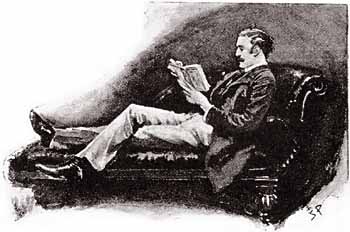
I found that pretty strange, especially, Playing the Game.
If you don't 'trust' Watson, at what point do you start in your study of the Canon.
That is not to say Watson, intentionally or unintentionally never made errors or mistakes.
But to not trust him, to me, almost makes Playing the Game pointless.
Because at that point you really can't believe anything in the Canon is a reliable place to start.
Not trusting Watson means; Can you really believe he was in Afghanistan and wounded while there?
You have to have somewhere to start, and for me, that is Watsons word.
So much is already questioned in the Canon for probability, possibility and reliability, but we have to hold somethings a true to have a point of reference.
One way I like to look at the Canon of Sherlock Holmes is kind of like looking at the stories written by James Herriot. The Yorkshire Vet how wrote the wonderful tales of his treating animals in Yorkshire from the late 30's through the 70's.
While we know names and places were changed in the books, and some dramatic license was taken to make the tales more readable, we know that the tales were based on his experiences.
We also know Watson changed names and dates and places to protect individuals within the cases.
We know that even Holmes thought his good friend often embellished the cases a little more than Holmes would have liked. But perhaps he had to do that to make it more readable for the masses.
But enough research has been done to show, also, how accurate much of Watsons writing really was.
Watson is known as the stalwart companion of the pair. And stalwart means reliable and loyal, and I would add the word trustworthy to his personality.
What do you think; Was Watson worth our trust?
Started an interesting discussion with someone on Facebook yesterday.. . .
It was based on paper written by J.T. Crammond for a meeting of the Parallel Case of St Louis scion society.
Mr. Crammond's paper was titled 'Can we trust the Canon?' Of course it was done as Playing the Game.
While his paper is not the discussion here, someone falling the meeting on Facebook stated that 'he' never trusted Watson. His statement was, "John, I've always been of the opinion that you cannot trust Watson. However, I've never really considered it when it comes to The Canon itself."
To me that statement doesn't seem possible how can you, One; not trust Watson. Two; if you don't or do, how can you have either without the context of the Canon.
We went back and forth a little on this without him really backing up his comment, but in the end he suggested that a back and forth reply on Facebook was not the venue he wanted to explore the topic.
I look forward to him following it up somewhere else.
What are your thoughts? Do you 'trust' Watson?
I will fill in my thoughts latter in the day.
Let me know yours.
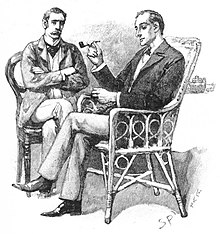
Mr. Crammond's paper was titled 'Can we trust the Canon?' Of course it was done as Playing the Game.
While his paper is not the discussion here, someone falling the meeting on Facebook stated that 'he' never trusted Watson. His statement was, "John, I've always been of the opinion that you cannot trust Watson. However, I've never really considered it when it comes to The Canon itself."
To me that statement doesn't seem possible how can you, One; not trust Watson. Two; if you don't or do, how can you have either without the context of the Canon.
We went back and forth a little on this without him really backing up his comment, but in the end he suggested that a back and forth reply on Facebook was not the venue he wanted to explore the topic.
I look forward to him following it up somewhere else.
What are your thoughts? Do you 'trust' Watson?
I will fill in my thoughts latter in the day.
Let me know yours.
Monday, March 23, 2020
One week into our Sherlockian hiatus. . .
So far, the Harpooners of the Sea Unicorn have only had to cancel one upcoming meeting.
 The Harpooners, or HSU, get the name from the Adventure of Black Peter.
Well while we are on hiatus from meeting in public we are going to experiment with having an online meeting today. (The meeting will be later, but we will test it today.)
But it also got me thinking that this would be a good time to get started on some of those long put off Sherlockian scholarly writings we have been wanting to do.
Let's see if I can make myself get started.

Well while we are on hiatus from meeting in public we are going to experiment with having an online meeting today. (The meeting will be later, but we will test it today.)
But it also got me thinking that this would be a good time to get started on some of those long put off Sherlockian scholarly writings we have been wanting to do.
Let's see if I can make myself get started.
Monday, April 29, 2019
I am not sure how one blogger out there can continually. . .
complain about the membership requirements of the BSI and yet so readily almost pander to another group which states, ". . . are an all-female group of Sherlock Holmes fans dedicated to approaching the fandom from a female point of view, as well as engaging in fun, lively conversations about the canon, film and television adaptations of Arthur Conan Doyle’s work, and associated topics...
Now I am okay with the requirements that both societies have set. If you want to be in an all female group that doesn't allow males, well that's up to you.
But if you want to be a member of another group that also limits it's membership for what ever reasons it chooses, that's fine also.
If you don't like how either one does it, don't support them, or don't accept the invitation to join (or sent back your shilling, get the divorce).
If said bloggers goes along with the saying "all Sherlockiana is good Sherlockiana", well lets just say he would have half as many posts.
Now I am okay with the requirements that both societies have set. If you want to be in an all female group that doesn't allow males, well that's up to you.
But if you want to be a member of another group that also limits it's membership for what ever reasons it chooses, that's fine also.
If you don't like how either one does it, don't support them, or don't accept the invitation to join (or sent back your shilling, get the divorce).
If said bloggers goes along with the saying "all Sherlockiana is good Sherlockiana", well lets just say he would have half as many posts.
Thursday, December 14, 2017
Sherlock Holmes at his most jocular - BLUE
BLUE has always been one of my favorites. BLUE and HOUN. Both are full of atmosphere and settings I can relate to.
Each year at about this time I reread BLUE as part of my Sherlockain Christmas tradition.
It never becomes stale or fails to satisfy with our only filling of Sherlockain Christmas cheer.
I also get the feeling that Holmes is, for some reason, Canonically, at his most cheerful.
Was it Watson's visit? Was his career at it's peak? Although I am sure Holmes is sincere in his glad tidings in seeing his old friend, I feel there is more to it than we will ever know.
But throughout this case Holmes is simply in a great mood. And in good humor.
Almost every paragraph of Holmes' dialogue holds some little moment of light-heartiness;
". . .a(n) most unimpeachable Christmas goose.”
". . .to fulfil the ultimate destiny of a goose, . . ."
For answer Holmes clapped the hat upon his head. It came right over the forehead and settled upon the bridge of his nose. “It is a question of cubic capacity,” said he; “a man with so large a brain must have something in it.”
When I see you, my dear Watson, with a week’s accumulation of dust upon your hat, and when your wife allows you to go out in such a state, I shall fear that you also have been unfortunate enough to lose your wife’s affection.”
We don't often see Holmes explain his deductions and observations in, I feel, such a light-hearted way.
“Eh? What of it, then? Has it returned to life and flapped off through the kitchen window?”
“Very glad to see you. I dine at seven. There is a woodcock, I believe. By the way, in view of recent occurrences, perhaps I ought to ask Mrs. Hudson to examine its crop.”
With the exceptions of James Ryder, Holmes deals with everyone in this story in an almost whimsical way; " Chance has put in our way a most singular and whimsical problem . . . "
"If you will have the goodness to touch the bell, Doctor, we will begin another investigation, in which, also a bird will be the chief feature.”
Some chronologists but Watson marriage before BLUE, so for those we assume Watson was with Mary for the Christmas Holiday.
Holmes we will never know how he spent his. But however, it seems to have lifted his spirits.
I can't help but feel this was a good holiday season for Holmes, even if we don't know what brought on his good cheer, and while John Horner may not have had a good Christmas day, at least his New Year was looking up.
Each year at about this time I reread BLUE as part of my Sherlockain Christmas tradition.
It never becomes stale or fails to satisfy with our only filling of Sherlockain Christmas cheer.
I also get the feeling that Holmes is, for some reason, Canonically, at his most cheerful.
Was it Watson's visit? Was his career at it's peak? Although I am sure Holmes is sincere in his glad tidings in seeing his old friend, I feel there is more to it than we will ever know.
But throughout this case Holmes is simply in a great mood. And in good humor.
Almost every paragraph of Holmes' dialogue holds some little moment of light-heartiness;
". . .a(n) most unimpeachable Christmas goose.”
". . .to fulfil the ultimate destiny of a goose, . . ."
For answer Holmes clapped the hat upon his head. It came right over the forehead and settled upon the bridge of his nose. “It is a question of cubic capacity,” said he; “a man with so large a brain must have something in it.”
When I see you, my dear Watson, with a week’s accumulation of dust upon your hat, and when your wife allows you to go out in such a state, I shall fear that you also have been unfortunate enough to lose your wife’s affection.”
We don't often see Holmes explain his deductions and observations in, I feel, such a light-hearted way.
“Eh? What of it, then? Has it returned to life and flapped off through the kitchen window?”
“Very glad to see you. I dine at seven. There is a woodcock, I believe. By the way, in view of recent occurrences, perhaps I ought to ask Mrs. Hudson to examine its crop.”
With the exceptions of James Ryder, Holmes deals with everyone in this story in an almost whimsical way; " Chance has put in our way a most singular and whimsical problem . . . "
"If you will have the goodness to touch the bell, Doctor, we will begin another investigation, in which, also a bird will be the chief feature.”
Some chronologists but Watson marriage before BLUE, so for those we assume Watson was with Mary for the Christmas Holiday.
Holmes we will never know how he spent his. But however, it seems to have lifted his spirits.
I can't help but feel this was a good holiday season for Holmes, even if we don't know what brought on his good cheer, and while John Horner may not have had a good Christmas day, at least his New Year was looking up.
Tuesday, December 12, 2017
Did you have dinner or supper?

Although we now use the words dinner and supper interchangeably to mean the same thing, our largest meal of the day. It has not always been as such.
Well, at least in certain cultures.
Most of us have grown up in a society that now runs on three meals a day; breakfast, lunch and dinner.
At least that is the way my family has always done it.
Breakfast, usually oatmeal or cereal (with bacon and eggs on weekends).
Lunch, what ever mom packed for school or the lunch ladies cooked.
And dinner, when dad got home from work, and our biggest meal of the day.
I don't remember us ever having a distinction between the use of the words dinner or supper, although I seem to have been called to more 'dinner times' than 'supper times'.
For much of the English speaking world dinner is the biggest meal of the day, usually taken sometime between noon and early evening.
Even the now traditional Sunday Roast is sometimes called Sunday Dinner or Roast Dinner.
In the USA we usually eat our Thanksgiving or Christmas meals early in the afternoon and they are usually referred to as Thanksgiving Dinner or Christmas Dinner.
And supper would be a lighter meal taken later in the evening. The etymology of supper is usually seen to come from some form of soup. Which would suggest a light meal.
For much of it's modern history the time of 'dinner' seemed to keep getting pushed back, until what had been a meal taken at two or three in the afternoon, to now easily taking place much later, at say six or seven. One survey by an Australian winemaker found that the average time in the UK for the evening meal is now about 7:47 pm.
Throw into the mix 'Tea Time' and what time that could take place, and what is served with 'Tea Time' and it can get real confusing.
Where I have always assumed 'Tea Time' was at 4pm, source suggest it can also be taken some time between 5 and 7.
It is associated with the working class and is typically eaten between 5 pm and 7 pm. In the North of England, North and South Wales, the English Midlands, Scotland and in rural and working class areas of Northern Ireland and the Republic of Ireland, people traditionally call their midday meal dinner and their evening meal tea(served around 6 pm), whereas the upper social classes would call the midday meal lunch or luncheon and the evening meal (served after 7 pm) dinner (if formal) or supper (if informal). Source
So, with all that said, there doesn't seem to be any firm set rules of when you call what, it just depends on where you grow up.
With that said; what prompted this inquiry was when Sherlock Holmes says, “Very glad to see you. I dine at seven. There is a woodcock, I believe. By the way, in view of recent occurrences, perhaps I ought to ask Mrs. Hudson to examine its crop.”
And then a few minutes later Holmes and Watson have the following exchange; “It is quite certain that he knows nothing whatever about the matter. Are you hungry, Watson?”
“Not particularly.”
“Then I suggest that we turn our dinner into a supper and follow up this clue while it is still hot.'
This suggests that, one; dinner was going to be Holmes big meal of the day. Two; it was going to be rather late, seven. And three; super would be a very late, a much lighter meal (maybe cold woodcock sandwiches?).
We must also remember that this habit of assigning times to meals can also be considered an industrial age habit and mostly, as suggested, a middle and upper class tradition. Poor countries and rural workers were more likely to take the meals when time and abundance allowed.
These are the Canonical discussion that made me wonder how we use the words dinner and supper.
BLUE ends with Holmes saying to Watson, "If you will have the goodness to touch the bell, Doctor, we will begin another investigation, in which, also a bird will be the chief feature.”
So, we know their little expedition didn't even start till at least seven. Probably took at least an hour or so. So supper was sometime after 8 or 9pm.
I hope Mrs. Hudson wasn't keeping things warm all that time.
At this point in the story I see an image of the long suffering Mrs. Hudson more as she is portrayed in 'Sherlock' than in Granada's Sherlock Holmes.
Friday, December 8, 2017
This may turn into a small monograph soon . . . . .
“Then I suggest that we turn our dinner into a
supper and follow up this clue while it is still hot.”


Wednesday, December 6, 2017
And the tradition continues. . . .
An SHSSC Christmas tradition - The Adventure of the Fur-Trimmed Hat

The Adventure of the Fur-Trimmed Hat
By James C. O’Leary
I had called upon my friend Sherlock Holmes on Christmas Eve, with the intention of wishing him the compliments of the season. He was lounging upon the sofa in a chartreuse dressing-gown, the day’s newspapers well-studied and his black briar emitting a curl of blue smoke in the ashtray. Beside the couch was a straight-backed chair, and on the stile hung a seedy and disreputable fur-trimmed stocking hat, much the worse for wear. A lens and a forceps lying upon the seat of the chair suggested that the hat had been hung with care for the purpose of examination.
"You are engaged," said I, "perhaps I interrupt you."
"Not at all. I am glad to have a friend with whom I can discuss my results. The matter is a perfectly trivial one" (he motioned his thumb with a jerk in the direction of the cone-shaped covering), "but there are points in connection with it which are not entirely devoid of interest, and even of instruction."
I seated myself in his armchair, and accepted the glass of heated eggnog Holmes offered, for the day had been still and cold and now that night had fallen, it was colder still. "I suppose," I remarked after a sip of the landlady’s concoction and the warm glow that started to radiate from within, "that, homely as it is, this thing has some deadly story linked to it--- that it is the clue which will guide you in the solution of some profound mystery, and the punishment of some malefactor."
"No, no. No crime," said Sherlock Holmes, laughing. "Only one of those whimsical little incidents which will happen when you have four and a half million human beings cheek-by-jowl within the space of a few square miles. Amid the action and reaction of so dense a swarm of humanity, every possible combination of events may be expected to take place, and many a little problem will be presented which may be striking and bizarre without being criminal. You know Peterson, the commissionaire?"
"Yes."
"It is to him that this trophy belongs."
"It is his hat."
"No, no; he found it. Its owner is unknown. I beg that you will look upon it, not as a tattered tupplue, but as a conical conundrum. Your arrival is fortuitous as Peterson is downstairs with Mrs. Hudson getting a cup of tea and I as yet have listened to his story. We shall listen to it together. In the meantime let us see what we can deduce of the owner.”
"From his hat?"
"Precisely."
"But you are joking. What can you gather from this old battered bonnet?"
"Here is my lens. You know my methods. What can you gather yourself as to the individuality of the man who has worn this article?"
I took the harried headgear in my hands, and turned it over rather ruefully. It was a red triangular plush cap with a white fur pom-pom at the point, and white fur trim around the base. The lining had been of red silk, but was a good deal stained. There was no maker's name, at least as far as I could tell, but sewn in once-golden thread were strange linear hieroglyphics. It was pierced in the inner brim for a hat-securer, but the elastic was missing. For the rest, it was exceedingly dusty, and spotted in several places, although there seemed to have been some attempt to hide the discolored patches by daubing them with red ink.
"I can see nothing," said I, handing it back to my friend.
"On the contrary, Watson; how many fingers am I holding up?”
“Three.”
“Your eyesight is fine. You fail, however, to apply reason from what you see."
"Then pray tell me,” I replied some asperity, “what it is that you can infer from this hat?"
He gazed at it in the peculiar introspective fashion which was characteristic of him when he took on the air of a disappointed tutor lecturing a particularly dense pupil. "It is perhaps less suggestive than it might have been," remarked Holmes, "and yet there are a few inferences which represent at least a strong balance of probability. That the man was highly intellectual is of course obvious upon the face of it, and also that he was fairly well-to-do, although he has now fallen upon evil days. He had foresight, but has less now than formerly, pointing to a moral retrogression, which, when taken with the decline of his fortunes, seems to indicate some evil influence, probably elves, at work upon him.”
“Elves!”
“This may account also for the obvious fact that his wife has ceased to love him,” he continued, disregarding my remonstrance. “He has, however, retained some degree of self-respect. He is a man who leads a sedentary life, goes out little, perhaps just once a year, is middle-aged, has grizzled hair which he has had cut within the last few days, and which he anoints with rather expensive avocado-cream. These are the more patent facts which are to be deduced from his blushing bucket. Also, by the way, that it is extremely improbable that he has gas laid on in his house, no doubt because he lives on an isolated farm raising reindeer."
“Surely, you’re joking!”
“You know I detest that nickname. I don’t even allow my brother Mycroft to call me that.”
“No, no; I meant you are certainly not serious.”
“Ah. I’m quite serious, my dear fellow.”
"How did you deduce that this man was intellectual?"
For answer Holmes slipped the linty lid upon his head. The fur brim passed over the forehead and settled upon the bridge of his nose. "It is a question of cubic capacity," said he; "a man with so large a brain must have something in it."
"The decline of his fortunes, then?"
"This hat is old. These type of plush fur lined hats have long been out of fashion. It is a hat of the very best quality. Look at the fur, and the excellent lining. If this man could afford to buy so expensive a hat. and has had no hat since, then he has assuredly gone down in the world."
"Well, that is clear enough, certainly. But how about the foresight, and the moral retrogression?"
"Here is the foresight." said he, putting his finger upon the little disc and loop of the hat-securer. "They are never solid upon hats. If this man ordered one, it is a sign of a certain amount of foresight, since he went out of his way to take this precaution against the wind. But since we see that he has broken the elastic, and has not troubled to replace it, it is obvious that he has less foresight now than formerly, which is a distinct proof of a weakening nature. On the other hand, he has endeavored to conceal some of these stains upon the plush by daubing them with red ink, which is a sign that he has not entirely lost his self-respect. The further points, that he is middle-aged, that his hair is grizzled, that it has been recently cut, and that he uses avocado-cream, are all to be gathered from a close examination of the lower part of the lining. The lens discloses a large number of hair-ends, clean cut by the scissors of the barber. They all appear to be adhesive, and there is a distinct odor of avocado-cream, which is rare in this part of the world and speaks of a wanton self-indulgence and further evidence of moral regression. This dust, you will observe, is not the gritty, gray dust of the street nor the dirt of the country, but the fluffy brown dust of the house, showing that it has been hung up indoors most of the time; while the marks of moisture upon the inside are proof positive that the wearer perspired very freely, and could, therefore, hardly be in the best of training."
"But his wife - you said that she had ceased to love him."
"This hat has not been brushed for months, perhaps a whole year. When I see you, my dear Watson, with a year's accumulation of dust upon your hat, and when your wife allows you to go out in such a state, I shall fear that you also have been unfortunate enough to lose your wife's affection, if not your wife herself."
"You have an answer to everything. But how on earth do you deduce that the gas is not laid on in the house?"
"One tallow stain, or even two, might come by chance; but, when I see no less than five, I think that there can be little doubt that the individual must be brought into frequent contact with burning tallow - walks upstairs at night probably with his topper in one hand and a guttering candle in the other. Anyhow, he never got tallow stains from a gas jet."
"How did you deduce that this man was intellectual?"
For answer Holmes slipped the linty lid upon his head. The fur brim passed over the forehead and settled upon the bridge of his nose. "It is a question of cubic capacity," said he; "a man with so large a brain must have something in it."
"The decline of his fortunes, then?"
"This hat is old. These type of plush fur lined hats have long been out of fashion. It is a hat of the very best quality. Look at the fur, and the excellent lining. If this man could afford to buy so expensive a hat. and has had no hat since, then he has assuredly gone down in the world."
"Well, that is clear enough, certainly. But how about the foresight, and the moral retrogression?"
"Here is the foresight." said he, putting his finger upon the little disc and loop of the hat-securer. "They are never solid upon hats. If this man ordered one, it is a sign of a certain amount of foresight, since he went out of his way to take this precaution against the wind. But since we see that he has broken the elastic, and has not troubled to replace it, it is obvious that he has less foresight now than formerly, which is a distinct proof of a weakening nature. On the other hand, he has endeavored to conceal some of these stains upon the plush by daubing them with red ink, which is a sign that he has not entirely lost his self-respect. The further points, that he is middle-aged, that his hair is grizzled, that it has been recently cut, and that he uses avocado-cream, are all to be gathered from a close examination of the lower part of the lining. The lens discloses a large number of hair-ends, clean cut by the scissors of the barber. They all appear to be adhesive, and there is a distinct odor of avocado-cream, which is rare in this part of the world and speaks of a wanton self-indulgence and further evidence of moral regression. This dust, you will observe, is not the gritty, gray dust of the street nor the dirt of the country, but the fluffy brown dust of the house, showing that it has been hung up indoors most of the time; while the marks of moisture upon the inside are proof positive that the wearer perspired very freely, and could, therefore, hardly be in the best of training."
"But his wife - you said that she had ceased to love him."
"This hat has not been brushed for months, perhaps a whole year. When I see you, my dear Watson, with a year's accumulation of dust upon your hat, and when your wife allows you to go out in such a state, I shall fear that you also have been unfortunate enough to lose your wife's affection, if not your wife herself."
"You have an answer to everything. But how on earth do you deduce that the gas is not laid on in the house?"
"One tallow stain, or even two, might come by chance; but, when I see no less than five, I think that there can be little doubt that the individual must be brought into frequent contact with burning tallow - walks upstairs at night probably with his topper in one hand and a guttering candle in the other. Anyhow, he never got tallow stains from a gas jet."
“But elves?”
“I am familiar with over thirty types of European writing systems. These markings sewn into the lining are Tomte runes, peculiar to an especially short Scandinavian race locals refer to as ‘elves’. Our friend the hat owner is not a Tomte himself as seen by the hat size but must have a deep association with them to adapt their writing. They are a happy but short-tempered race, given to much mischief. Loyal if treated well, but pranksters and thieves if crossed. Long association with them could again lead to moral retrogression.”
“And the reindeer farming?”
“There are several indications. One: this type of hat is still fashionable in northern climes. Two: the white fun, unless I am very much mistaken, is polar bear, again an indication the wear resides up north. Three: the Tomte live in Scandinavia and nowhere else. Four: there are reindeer hair on the outside of the hat. As the author of A Study of Ungulates and Ruminants and Their Association with Criminal Actives, Illustrated with Forty Color Plates I was able to identify the fur quite easily. It seems then highly probable our mysterious friend is a reindeer farmer.”
Footsteps sounded on the stair and after a knock on the door Peterson the commissionaire entered. He greeted us cordially and at Holmes’ urging began his tale.
“I had an important commission this evening, but because it was Christmas Eve, the cabbie decided not to wait for me. The streets were fairly deserted and there was not another cab to be found so I started to walk back home while keeping my eyes peeled for transportation. I was walking down Bartholomew Lane---“
Holmes sat up straight on the sofa. “You were in the City?”
“Yes sir. Quiet as a tomb.”
“Go on”
“Well, it was dusk and not a soul to be seen. I reached the corner when I suddenly heard the jingling of bells and out of the sky dropped this funny hat, right at my feet. It’s not quite a bobble or a toque and it had this queer sort of writing inside and I thought that if anyone could make sense of this happening and maybe return the hat to its owner, it’s Mr. Holmes.”
“What else.”
“Sir?”
“What else did you find, Peterson?”
The commissionaire’s cheeks flushed. We knew Peterson to be an honest man and his reaction was one of embarrassment, not guilt. “We-ell,” he stammered, “after I picked up the hat and looked at it and took a step onto the way of going home, this piece of paper fluttered out of the sky right into my hand. I thought it was…a reward – in advance, like, for getting the hat back to its owner…’
“A reward?”
“You know, for doing a good deed…from…” Here Peterson looked up at the ceiling. He reached into his pocket then held out his hand. There in his palm was a clean, crisp five pound note. Holmes took up his lens and the note and examined it under the lamp and even held it under his nose briefly. When he turned back to us his manner was still phlegmatic but there was a most singular intentness in his eyes that told me he had chanced upon some clue of importance. Holmes went over to his desk. “I propose an exchange, Peterson, this fiver for yours. It’s not quite as new, but it will spend the same and I guarantee it has the same amount of luck as yours.”
Peterson took the note with some reluctance. Holmes turned back to his desk and scribbled out a message, handed it to the commissionaire along with some coins. “Please go to the telegraph office and send this before you go home. And,” he said placing a hand on the man’s shoulder, “I can assure you this felt-and-fur Phrygian will find its home ere long.”
As soon as the door close, Holmes tore off his dressing gown and headed to the wardrobe in his room, all the while speaking. “What a blind beetle I’ve been! You remember that pretty little problem of Helen Stoner’s at Stoke Moran? At first all the clues pointed to the gypsies but once on scene it became obvious it was that group of plasterers hired by her nefarious step-father.” Readers of these somewhat incoherent series of memoirs will recall “The Adventure of the Spackled Band”. “Well, my deductions about that hirsute headgear were perfectly reasonable, logical and entirely wrong, all because I lacked two facts.”
“The five pound note?”
“And the location.”
“Bartholomew Lane?”
“The corner of Bartholomew Lane and Threadneedle Street.”
A dark and sinister notion started forming in my mind. Holmes came out of his room and tossed me a pistol while checking to see that his was loaded. “Be a good fellow and hail us cab, eh, Watson?”
The horse’s hooves beat out a swift tattoo as our hansom headed to the City. “I believe you suspect Peterson’s fiver was a forgery.”
“You positively scintillate tonight, Watson.”
“So the hat is part of a disguise.”
“For over one hundred and thirty years Jules-Thomas and Sons has been operating out of the same building in the West End providing costumes and property for theater companies and acting troupes. Like many immigrants to our shores, they anglicized their name from the original Scandinavian Jultomten.”
“Jultomten---Tomte?”
“Exactly so, Watson. The Jules-Thomases are descended from that Scandinavian race locally known as elves and even today their scion are exceedingly short people. Early in the company’s history the family name was sewn into their costumes---“
“--- in Tomte runes.”
“Watson, your eyesight improves by the moment! We can now look at our muffed mantle in a new light. It was manufactured well over a century ago of the best materials and meant to be durable. It was designed to fit all heads so was made on the larger side, so it could accommodate wigs. There is also the well-known factor of actors possessing larger crania than the general population. To save costs, it is repaired frequently, such as the touch-ups of red ink. As there is usually strenuous action on stage during the course of a production, that would account for the hat-securer and the sweat stains. As there is not much call for this type of hat except during the holiday season, there would naturally be a many-months accumulation of dust in the storage area located in the oldest part of the building where gas has yet to be laid. The dust tells us one other thing; professionals like Jules-Thomas would not allow a costume to go out in such a condition. Therefore, it must have been stolen.”
“The freshly-cut grizzled hair then must belong to the thief.”
“Bravo, Watson! I see that marriage has not staled your infinite variety. Cabbie, stop here.” We were let off at Cheapside and Queen Victoria Street and, being as inconspicuous as possible on the deserted streets, made our way to the “Grey Lady of Threadneedle Street”. The Bank of England, the financial heart of the Empire stood dark, silent and imposing in the light of the gibbous moon. The air was still and our breath shot out in front of us like smoke from a pistol shot. We made our way along the bank’s façade on Princes Street where Holmes found a rope ladder almost invisible in the shadows. We climbed to the first level roof and surveyed the five story wall that stretched above our heads to the top of the building. Here the cunningness of the rope-ladder’s design was made clear as even in the bright moonlight it was practically invisible to the eye and from the street below would be non-existent.
With Holmes in the lead we ascended the wall in the bracing winter night air, up past the sloping shingles of the top floor to the narrow, relatively flat roof. There, not far from us, silhouetted against the sky were a group of two-legged reindeer gathered around a skylight. Nearby appeared to be a large sledge piled high with packages. They spoke in whispers with their backs to us, antlers bobbing in the cold. Holmes took out his revolver and I followed suit. We crept to within a few feet of the costumed men then Holmes stood and in a quiet voice said, “Gentlemen, do not move.”
His voice rang out like cannon fire in the hushed darkness, seemingly turning the men to statues. Holmes edged closer to the skylight. “My friend here is known as the Deadly Doctor, so pray, be still,” he said sotto voce as he peered down in the stygian depths. I took pride in Holmes’ complement of my marksmanship until the sniggering of one of the men reminded me of its possible double meaning. The cocking of my hammer shut him up.
Presently, a shuffling sound emanated from within the building and up rose from the black hole a head of long white hair, then a face surrounded by a full white beard. One red-mittened hand held the rope ladder attached to the skylight, the other a bag slung over a shoulder. Holmes clapped his gun to the man’s head. “Up and out slowly, if you please. That’s good. Now place the sack down. Right. Watson, you’ve heard me speak of this gentleman, but I don’t believe you’ve had the pleasure of meeting him. Doctor John Watson, Professor James Moriarty.” Holmes had pocketed his gun, grabbed the hair in one hand and the beard in the other and yanked away. There stood the former mathematics professor, his bald pate fringed with grizzled hair gleamed in the moonlight, his sunken eyes glaring with malevolence at the detective. “A masterful performance, Professor, although your costume is sadly incomplete.”
Comprehension broke on his features as the whole chain of events that led to his capture became clear. “The hat! If it wasn’t for that damned freak gust of wind--- “ Those were his first and last words of the evening as he clamped his mouth shut and refused to speak further.
Then from out in the street there arose such a clatter. “Watson,” said Holmes, his gun now back out and trained on Moriarty, “take that gentleman there” (he indicated one of the reindeer who would appear to be most at home at Newgate) “over to the ledge and have him report what he sees.”
I motioned the brute over and he peered down. “There’s a great lot of Black Marias, a fire brigade and a whole lot of coppers.” I motioned the man back to his herd.
“That will be Inspector Bradstreet, the Yard, the City Police and the ladder engine. I am afraid your brilliant plan of stealing the actual five pound note plates” (here he tapped the sack with his foot) “and substituting counterfeit plates to cause the financial collapse of the Empire is for naught, Professor.” City and Metropolitan Police swarmed to the roof and soon the two professional law groups were fighting over who would make the arrest and who would claim credit in the papers. Eventually, the criminals were led away and the lawmen cleared the roof leaving Holmes and I alone at the scene.
Holmes examined the “sledge”, which was a balsa cutout ingeniously constructed to fold into a small, portable square for easy transport, yet from the street or the window of a neighboring building would appear to be substantial.
“There is always a touch of the extravagant to Moriarty’s schemes. To create a tableau of Father Christmas visiting the Bank of England just to discredit any possible witnesses…” He shook his head. “Hum. I wonder…”
What is it, Holmes?”
“Peterson said he heard bells, then the cherry chapeau landed at his feet, yet neither Moriarty nor his ‘reindeer’ were wearing bells, and this cutout certain doesn’t have any. Where did the sound come from?”
Then above the distant sound of London there was the faint jingling of bells, which grew louder, then a voice from above said, “Good night, Mister Sherlock Holmes. Ho, ho, ho.” We both turned skywards and there across the waxing moon appeared four pair of reindeer drawing a sledge driven by a rotund bearded jolly man who waved at us. As we watched, the apparition turned to the north and rapidly disappeared clean out of sight.
I do not know how long we stood there transfixed but finally I whispered my companion’s name. That broke the spell. Holmes snapped, “Watson, you know my maxim that when you eliminate the impossible, whatever remains, no matter how improbable, must be the truth. As it is impossible for reindeer to fly, that the only vehicle able to lift such a sledge is a hot-air balloon, which was not in evidence, and further a hot-air balloon could not achieve such speeds as witnessed, there can be only one probability for our folie à deux; Mrs. Hudson spiked our eggnog with absinthe!
“However, as this is the season of forgiveness, we shall not reprimand her, or mention it to her, or,” he turned to me and spoke in a steely voice, “mention this incident to anyone, ever!”
Holmes strode the roof edge and the rope ladder, then stopped and stared thoughtfully at that spot in the northern sky where the apparition vanished and where now faintly glowed a star.
“You know, Watson,” he spoke slowly as a clock chimed midnight, “I am not one to celebrate holidays, but if I were to wish for a present, I can think of no better one than to be with my old comrade-in-arms, back in action and on the thrill of the chase, putting the most dangerous criminal in London behind bars. Complements of the season.” He stuck out his hand.
“Complements of the season, Holmes.”
We shook.
For inspiration, I’d like to thank John Foster and Gahan Wilson. ---JCO’L
Saturday, November 18, 2017
The Criminal Mastermind of Baker Street by Rob Nunn - A review.

I don't like reading books about Holmes that takes him out of my comfort zone.
Rob asked my to take a look at his first book and give my thoughts.
What Rob has done is take a fun exploration into Holmes career as if he had taken that once suggested path down the road to a career in crime.
Rob has connected in some way all sixty of the stories into a web of crime that only Moriarty could appreciate.
Smoothly blending many of the habits and traits we love about Holmes while adding an almost noble veneer to a mob boss in Victorian London.
He has not taken the heart that is inside Holmes and Watson and made them Moriarty like in that of a one dimensional crime boss, but instead has tried to make their new life explainable and acceptable.
Most of the places and characters we love make an appearance in the book and make it feel familiar.
The Holmes in Criminal Mastermind is a crime boss for the little people, with at times a Robin Hood like air.
If I am to find any faults with Robs first book it would be that on a couple of occasions the conclusions seemed abbreviated or too quick to come to an end.
And with any tale of Holmes and Watson I would have liked to have seen them written in Watson's hand.
Rob's writing is very good and you can tell he has a background in education and a love for his subject.
I enjoyed the book and look forward to more works from Rob Nunn.
Monday, October 30, 2017
The Criminal Mastermind of Baker St. by Rob Nunn - A book review to follow.

But a local Sherlockian that I have met and correspond with has asked me to review his latest book.
So while it seems to take Sherlock Holmes and Dr. Watson down a path I would never consider, I must admit I am looking forward to reading it..
So, in the next couple of days, be looking for my thoughts on Rob's new book.
Wednesday, September 20, 2017
After such a good interview, I can't believe they just picked up on the word 'transgender'. . .
Kareem Abdul-Jabbar Predicts the Future of Sherlock Holmes
The novelist and NBA legend says the detective could be "an alien" or 'transgender.'


The novelist and NBA legend says the detective could be "an alien" or 'transgender.'
Tuesday, September 19, 2017
Well, if he says it's okay. . . .
Benedict Cumberbatch Supports Female Sherlock Holmes
Benedict Cumberbatch is open to having a female Sherlock Holmes in the future. The British actor, who has played the contemporary version of the iconic character for four seasons now in the hit BBC TV series Sherlock, has made it clear that he has no problem whatsoever with the thought that a gender switch might be executed for the fan-favorite detective in the future.
Coming off of the huge announcement that long-running British series Doctor Who has tapped Jodie Whittaker to take over Peter Capaldi’s spot as the next reincarnation of the eponymous Time Lord, discussions about gender-swapping popular roles in mainstream media have become more frequent than ever. After years of campaigns for a female time-traveling doctor, the Broadchurch star was finally announced to be the Thirteenth regeneration of the character. Admittedly, not everyone was very receptive to the change, with some questioning the decision made by the BBC. Cumberbatch, however, is among those who are thrilled to see Whittaker’s take on such a pop culture icon.
Speaking to Variety while promoting his upcoming drama The Child In Time (which is the first venture from his new production company, SunnyMarch), the Oscars-nominated actor leapt to Doctor Who‘s casting shake-up’s defense and expressed his excitement to see Whittaker’s version of the Doctor:
“It’s an alien. Why can’t it be a woman, why can’t it be any gender? It doesn’t matter to me. I don’t speak as someone who has the right as a fan to have an incredibly strong opinion. I just speak as someone who wants to see Jodie Whittaker’s performance as the Doctor. I think she’s an extraordinary actress and we’re lucky, culturally, to have got her to agree to do it, let alone any debate ensuing about whether it’s right or wrong.”
Given his approval of a female Doctor, Cumberbatch was then asked about his thoughts of possibly also having a female version of his sassy detective role, Sherlock Holmes. Similar to his thoughts on Doctor Who, Cumberbatch does not see any problem with having a female Sherlock Holmes appear on either the small and/or big screen in the future. “Why not? I don’t care. ‘Sherlockina’ is coming to you soon,” he said.
While Cumberbatch does have a point regarding Doctor Who‘s gender swap, it might be a bit more complicated to do a similar change with Sherlock. The eponymous Time Lord’s regeneration every few years (or seasons, with regard to the show itself) provides the series with an opportunity to easily execute the lead modification without having to get into the nitty-gritty of what happened to the other iterations of the character and how come the new one is suddenly female after a slew of men playing the role. Sherlock’s various incantations, on the other hand, are all rather independent of one another. As such, should a female Holmes eventually makes her debut on the big and/or small screen, it would presumably be a separate entity from Cumberbatch’s version.
Thursday, August 3, 2017
Are we over thinking Sherlock Holmes?

As I came up as a Sherlockian most discussions were centered around details in the Canon (or lack of) and not Sherlock's proclivities.
Yea, sure, there were discussions about his sexual orientation (which I never understood) and how many times Watson was married to his moving wound many years ago. But seldom, if ever, did it become the center of the debate.
It, in and of itself, has become the backbone of many 'fans'.
Most of the time we explored history, details and 'things' within the stories; history of the martini, the 'dancing men' alphabet, what kind of dog was the 'Hound'.
So much debate (and sometimes not in a nice way) centers to much around what we desire Sherlock (or Benedict) to be rather than what we can discover just from the readings or research.
Sure, we can spend a lot of time arguing about whether or not Holmes would meet the Queen in just a sheet, or whether or not he could have been an over sexed ex-drug addict.
But in the end we are not really discussing the Canonical Sherlock Holmes.
With much of the recent, over the last several years, debate, we are trying to reshape a puzzle piece to fit into a different puzzle.
Lets all just relax a little and get back to our core.
Thursday, February 23, 2017
North of the Border, up Canada way. . . . Elementary S5 -E's 13 & 14
These latest two episodes involved our friends to the North, and focused, as it has a habit of doing, on issues that have been in the headlines lately, either on a small scale, black market maple syrup, or a large scale, global warming.
Well, maple syrup at thirteen hundred dollars a barrel, maybe it isn't such a small crime after all.
 This is a real photo of Global Strategic Maple Syrup reserves in Quebec.
In 2012 540,000 barrels were stolen, 12.5 percent of the reserve. A street value of 13.4 million dollars. (this heist is currently being planned as a movie).
So, yes, 'Over a Barrel' is a timely topic.
And 'Rekt in Real Life' is also a big money topic; the world of gaming.
I am enjoying this season a lot. Elementary has seemed to find a more comfortable format that is skipping some of the crazy of the first few years.
A couple of fun discussion points of these last couple of weeks could be the mention of cases Holmes was involved in that Watson did not record.
And perhaps collateral damage of cases Holmes did not take.
The Shinwell story line is getting a little tiresome, and I hope it resolves itself before next season.
And yes, I still think 'Elementary' is better than 'Sherlock'.

Well, maple syrup at thirteen hundred dollars a barrel, maybe it isn't such a small crime after all.

In 2012 540,000 barrels were stolen, 12.5 percent of the reserve. A street value of 13.4 million dollars. (this heist is currently being planned as a movie).
So, yes, 'Over a Barrel' is a timely topic.
And 'Rekt in Real Life' is also a big money topic; the world of gaming.
I am enjoying this season a lot. Elementary has seemed to find a more comfortable format that is skipping some of the crazy of the first few years.
A couple of fun discussion points of these last couple of weeks could be the mention of cases Holmes was involved in that Watson did not record.
And perhaps collateral damage of cases Holmes did not take.
The Shinwell story line is getting a little tiresome, and I hope it resolves itself before next season.
And yes, I still think 'Elementary' is better than 'Sherlock'.

Subscribe to:
Posts (Atom)