
Showing posts with label Watson. Show all posts
Showing posts with label Watson. Show all posts
Friday, April 17, 2020


Friday, April 10, 2020
Trusting Watson . . . . .
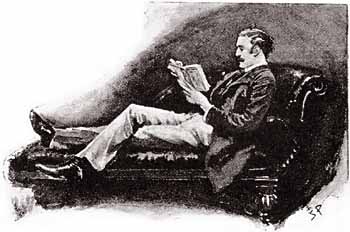
As I mentioned in the previous post, I had a discussion with another Facebooker and he made a comment about never really trusting Watson.
I found that pretty strange, especially, Playing the Game.
If you don't 'trust' Watson, at what point do you start in your study of the Canon.
That is not to say Watson, intentionally or unintentionally never made errors or mistakes.
But to not trust him, to me, almost makes Playing the Game pointless.
Because at that point you really can't believe anything in the Canon is a reliable place to start.
Not trusting Watson means; Can you really believe he was in Afghanistan and wounded while there?
You have to have somewhere to start, and for me, that is Watsons word.
So much is already questioned in the Canon for probability, possibility and reliability, but we have to hold somethings a true to have a point of reference.
One way I like to look at the Canon of Sherlock Holmes is kind of like looking at the stories written by James Herriot. The Yorkshire Vet how wrote the wonderful tales of his treating animals in Yorkshire from the late 30's through the 70's.
While we know names and places were changed in the books, and some dramatic license was taken to make the tales more readable, we know that the tales were based on his experiences.
We also know Watson changed names and dates and places to protect individuals within the cases.
We know that even Holmes thought his good friend often embellished the cases a little more than Holmes would have liked. But perhaps he had to do that to make it more readable for the masses.
But enough research has been done to show, also, how accurate much of Watsons writing really was.
Watson is known as the stalwart companion of the pair. And stalwart means reliable and loyal, and I would add the word trustworthy to his personality.
What do you think; Was Watson worth our trust?
I found that pretty strange, especially, Playing the Game.
If you don't 'trust' Watson, at what point do you start in your study of the Canon.
That is not to say Watson, intentionally or unintentionally never made errors or mistakes.
But to not trust him, to me, almost makes Playing the Game pointless.
Because at that point you really can't believe anything in the Canon is a reliable place to start.
Not trusting Watson means; Can you really believe he was in Afghanistan and wounded while there?
You have to have somewhere to start, and for me, that is Watsons word.
So much is already questioned in the Canon for probability, possibility and reliability, but we have to hold somethings a true to have a point of reference.
One way I like to look at the Canon of Sherlock Holmes is kind of like looking at the stories written by James Herriot. The Yorkshire Vet how wrote the wonderful tales of his treating animals in Yorkshire from the late 30's through the 70's.
While we know names and places were changed in the books, and some dramatic license was taken to make the tales more readable, we know that the tales were based on his experiences.
We also know Watson changed names and dates and places to protect individuals within the cases.
We know that even Holmes thought his good friend often embellished the cases a little more than Holmes would have liked. But perhaps he had to do that to make it more readable for the masses.
But enough research has been done to show, also, how accurate much of Watsons writing really was.
Watson is known as the stalwart companion of the pair. And stalwart means reliable and loyal, and I would add the word trustworthy to his personality.
What do you think; Was Watson worth our trust?
Thursday, June 30, 2016

Tuesday, June 28, 2016
Way don't we ever discuss Dr. Watsons retirement
As I sat last night around our pool, umbrellaed drink at hand, contemplating my own retirement I began to think about discussions of Watson's retirement or lack there of. . . . (screeching sound of a needle on a record)
Wait, I have a 9 year old. She is not about to let me sit around a pool and relax with an umbrellaed drink.
Actually it was on my way to work this morning, contemplating my own retirement, that I had the thought.
We know a little about Holmes' retirement at or around 1904 to study his beloved bees. And that on occasion he would come out of retirement to work on a case.
And we have always accepted that LAST (around 1914) was Holmes' last case, or at least the last published.
By 1917 we are told that Holmes was long retired, making him about 63 years old. (Hey, wait, that's about how old I will be when I retire!)
Around 1903 we learn that Watson is remarried, and we hope has a family. But we will never know if indeed he did have a family. I don't believe he ever did for I think it would have been mentioned.

Did he stay in practice and continue writing, much like the beloved vet, James Herriot.
Did he celebrate his writing career or was it never the main focus of his life?
Or when not at home or at work did he retire to his club?
Like Doyle did he take up golf?
Or did he die shortly after LAST?
It could be argued that the preface to that series of stories could have been written or reedited by someone other than Watson. We know LAST probably wasn't written by him.
And if Watson wasn't going to write the last story, why would he write the preface the way he did?
The last sentence of the preface could suggest that he had died before the edition of combined stories was complete, "Several previous experiences which have lain long in my portfolio have been added to His Last Bow so as to complete the volume."
Had Watson rejoined his old service? Although probably to old for front line service he may have found away to once again serve, and something could have happened to him.
What became of Watson after LAST?
Wait, I have a 9 year old. She is not about to let me sit around a pool and relax with an umbrellaed drink.
Actually it was on my way to work this morning, contemplating my own retirement, that I had the thought.
We know a little about Holmes' retirement at or around 1904 to study his beloved bees. And that on occasion he would come out of retirement to work on a case.
And we have always accepted that LAST (around 1914) was Holmes' last case, or at least the last published.
By 1917 we are told that Holmes was long retired, making him about 63 years old. (Hey, wait, that's about how old I will be when I retire!)
Around 1903 we learn that Watson is remarried, and we hope has a family. But we will never know if indeed he did have a family. I don't believe he ever did for I think it would have been mentioned.

Did he stay in practice and continue writing, much like the beloved vet, James Herriot.
Did he celebrate his writing career or was it never the main focus of his life?
Or when not at home or at work did he retire to his club?
Like Doyle did he take up golf?
Or did he die shortly after LAST?
It could be argued that the preface to that series of stories could have been written or reedited by someone other than Watson. We know LAST probably wasn't written by him.
And if Watson wasn't going to write the last story, why would he write the preface the way he did?
The last sentence of the preface could suggest that he had died before the edition of combined stories was complete, "Several previous experiences which have lain long in my portfolio have been added to His Last Bow so as to complete the volume."
Had Watson rejoined his old service? Although probably to old for front line service he may have found away to once again serve, and something could have happened to him.
What became of Watson after LAST?
Friday, June 26, 2015

Wednesday, November 5, 2014
Although I don't sit through the credits very often . . .
I should have caught this.
David Burke in "Women in Black" with Daniel Radcliffe.

David Burke in "Women in Black" with Daniel Radcliffe.
Wednesday, July 16, 2014
STUD - Brad's summer reading list - #12a - a look at the date - Once more this hallowed path we walk.

Brad is very involved with some other topics at the moment so I am not sure if that will happen or not.
When Brad several weeks ago posted his reading list he suggested that he believed the case, or at least the part concerning the meeting of Holmes and Watson, to have taken place the weekend of July 16th, 1881.
But on further reading I can't say I agree with that. But I am looking forward to his explanation.
I noticed Baring-Gould placed the date for the case of STUD in March of 1881, probably because Watson says March 4th.. I have not read his reasons yet, nor have I looked at any other chronologies.
But let's look at what we know.
We know Watson took his degree in 1878.
Which left him plenty of time to get trained by the army and arrive in In Candahar (his spelling) in time for the Battle of Maiwand.
The Battle of Maiwand took place on the 27th of July 1881.
So, after the great effort by Murray, Watson was sent to Peshawar, where he 'rallied' to the point of being able to get around and do some walking.
At this point he contracted 'enteric' fever.
Watson only states that 'for months' he despaired for his life, giving no actually length of time for his recovery.
That 'for months' can be taken several ways.
The easiest way out would to be to argue that what Watson actually meant was 'four' months, and the 'for' was just a mis-print. But like I said, that's the easy way out.
But let's look at a possible time for his recovery. I am not a doctor nor have I played one on TV, so most of this is just speculation.
After his shoulder injury he would probably be up walking long before the actual wound hailed.
So let's say about a month after being shoot Watson contracted that dreaded "curse of our Indian possessions".
At which point he was sent back to England.
So I guess at this point we have to decide what for us would be a reasonable time for "for months"
One modern estimation of how long typhoid fever will last without treatment is " a month or more".
Another states about two to four weeks.
We do however have to accept that Watson was in a somewhat debilitated state and was therefore weakened in constitution.
But given that, even if we give this period of time five months before he was finally sent home, that makes his arrival, after a month of travel, December when he returns to Portsmouth.
He was obviously well on his way to recovery once he arrived for he than "gravitated" to London, and no mention of time spent in hospital once in London is mentioned.
He next states that he then spends some time in a private hotel in the Strand.
Again we have to decide what Watson means by his description of "some time". Do we assume "some time" is longer or shorter than "for months".
We know he had nine months to make a decision on his situation, but we also know he didn't wait that long.
However, if he did indeed wait almost nine months and we are using our earlier argument of his recovery and travel taking about six months, that wold place him meeting Holmes in August or September.
But it is Watson's statement "It was upon the 4th of March, as I have good reason to remember. . ." that throws, for me, off the argument that this first chapter took place in July. Unless you want to argue that the relationship took more that a few months to develop to the point of this narration, and that would take us into March of 1882.
Watson also states that it was only for the week or so that they had no callers, and not for several months.
So if we are to accept that this first chapter of STUD took place in July of 1881 or we accept that it took until March of 1882 for Watson to write "It was upon the 4th of March. . .", which means it took them almost a year to get to the point were Watson would know of Holmes' occupation.
And I don't accept that.
If we lengthen the time of Watson's recovery and assume that he took almost all of his allotted nine months before he realized he needed new 'digs' then we must put the line "It was upon the 4th or March. .. " in 1882. And I don't accept that either. That would mean Watson's recovery took almost two years or it took Holmes and Watson a very long time to get to know each others habits.
Watson is very specific on two important dates, three if you need to count the year he got his degree.
First the Battle of Maiwand, which we know took place in July of 1880.
Second is the line "4th of March".
Remember we are only arguing when the first chapter takes place, the meeting of Holmes and Watson.
If we accept Brad's Holmes and Watson meetings in July of 1881 we have to place the line "4th of March" in 1882, unless you believe Watson did not mean the 4th of March.
Baring-Gould argues that STUD, the actual case took place in March of 1881, from Friday the 4th to Monday the 7th. He does not argue that they met in March.
If we except that the case took place in March of 1881 we have to also accept that they met a few weeks or so before March 4th, which would be late January or early February.
If you except July of 1881 as the date for the first chapter, one year after Watson's injury, you have to accept March of 1882 as the date of STUD. And neither Brad nor Baring-Gould place any cases in their chronologies of the Canon in 1882.
If you also accept July of 81 as the year and month of their meeting and you accept 1881 as the year of STUD than the date March 4th means nothing.
And I don't buy that.
Where Watson is for the most part specific, and he is three times in this story, we should accept that.
Later in chapter two we have a discussion between Holmes and Watson that could only take place between two individuals that do not yet know each other very well, which also helps place the first chapter before 1882.
The conversation is the one where Holmes finally explains his occupation to Watson and also Watson gets his first real education in Holmes' method. And at one point in this discourse Watson, to himself, states ' "This fellow is very clever, " I said to myself, "but he is certainly very conceited."
The only way I see that you could accept that this first chapter took place in July is to discard the 4th or March completely.
I am, however, going to take Watson at his word.
Monday, June 23, 2014
Brad's summer reading list - #8 - The Man with the Twisted Lip (TWIS) Watson was missed more than we realize.
I like TWIS.

It has Mary, although she is never named.
Watson is married, but so far for just a short time.
They have a nice house with staff. Is Watson making good money or is Mary paying for it?
And it has another strong woman character.
It would be interesting to go back (yet another potential paper) and see how many shrinking violets (no pun intended) there are in the Canon. There are lots of men, noble and other wise, who crumble under the strain in one case or another.
But how about the women. We don't find many, if any, who give up and just buckle under the pressure.
Well, except for maybe Katy Whitney. But she has after all been putting up with her husbands bad habits for a long time. But even her 'loss of self-control' is brief and no smelling salts are required.
But I think the key point to this case is how much Holmes missed and needed Watson. (As if we didn't already know that!)
One of the main things Holmes had always valued about Watson was his ability to remain silent, or as Holmes has recently commented, Watson's 'gift of silence'.
But it wasn't only that gift that was important, but also Watson's gift of being a good listener.
I think it could be said that Holmes was at his best when Watson was around as a sounding board for his ideas. Sometimes just saying something out load can clarify an idea, or even prove that the idea is not a good one.
And many times that was Watson's roll. Just having someone to say things out loud to would validate or cancel a conclusion for Holmes. Watson's comments were not even necessary most of the time.
But in TWIS Holmes does not have Watson as his filter, at least at the beginning, and perhaps he then over thinks the problem of Neville St. Clair.
But once Watson finds Holmes (or is it the other way around) Holmes can once again verbally lay out his case and find or lose validation.
As we know, Watson may not be the light itself, but he at least proves to be the catalyst.
Oh, um, and it does have Mary.
And a reference to beer!
And a reference to beer!
Wednesday, May 14, 2014

Thursday, May 8, 2014
Again, you only get one question. What would it be? What would you ask Watson?
You have caught an omnibus in London, and happen to sit next to Dr John H. Watson. You are having a very pleasant conversation when you realize your stop will be coming up soon and you only have time to ask one question and get an answer. What would it be?
 Would you ask about his wound?
His marriages?
What?
Would you ask him something about himself or Holmes?
This is your chance, what would you ask?
His marriages?
What?
Would you ask him something about himself or Holmes?
This is your chance, what would you ask?
Friday, November 22, 2013


Thursday, November 7, 2013
The Watsonian - review number two - 'A Long Afternoon: John Watson's Youth', by Robert S. Katz
Most of the time, when movies are made or books are written about historical facts, or people or events, a certain amount of license is taken to fill in details that may not be known about these facts, people or events.
Usually it is explained away as being done to add dramatic effect. And for the most part, we have come to expect that as normal. After all, if we only wanted the facts, and not to be entertained, we would watch more documentaries or sticking to non-fiction.
Some circles call it 'artistic license'.
This insertion of dramatic license to help fill out 'facts' quite often comes into play whenever Sherlockians Play the Game.
For, after all, if we are Playing the Game, when we explore the world of Holmes and Watson, we are stating, at least for a short period of time, that, in fact, Holmes and Watson are real. And that just like with any other 'historical' individuals, when facts are not known, we take a little dramatic license to fill them in.
This is most often done when writers create pastiches or novels (or screenplay's) about Holmes and Watson dramatizing events or times that Watson eluded to, but never wrote about.
The other time this is done is when a writer is trying to piece together tidbits of facts, like trying to piece together a puzzle, to create a clearer picture of an event or person. Example; We know a person visited town 'A', and then traveled to town 'L', and that took three days, and they stopped at least two nights and they traveled by train. Therefore, knowing the train traveled along this line, the others towns they could have stopped at, based on what we know, could be towns 'H' and 'K'. If the writer can come up with enough details, and facts and clues that make this a convincing possibility, then this new narrative sometimes becomes attached to the facts as common lore. As an example; We do not in fact know that John Watson's middle name is Hamish. But enough of a convincing argument has been suggested that in some circles, while Playing the Game, this has become attached to John Watson's biography. We do not know for sure when Holmes was born, but it has become commonly accept by many as 1854, because someone made a good case, derived from clues and hints, that this date was a very good possibility. And this to as become accepted by many as a real possibility.
The more clues the writer has and the less 'filling in the blanks' he has to do, the more credible his claim becomes. The more substantiated the facts and possibilities collected to add to the actual 'historical' facts, the more the new 'dramatization' is accepted, or at least considered with some relevance.
One of the only other things that can hinder the writer and his claims, even when just 'playing the game', is when the path he or she chooses to take Holmes or Watson down goes entirely somewhere the reader or reviewer does not want to see them go at all. Then the conclusions have very little chance of getting accepted.
And that brings us to the second article in the new The Watsonian I am going to 'review', 'A Long Afternoon; John H. Watson's Youth', by Robert S. Katz.
Mr. Katz wonderfully starts his piece off by reminding us how little we really do know about Holmes, and more importantly, for this publication, how even less we know about John H. Watson. And that how much we have come to 'know', is actually speculation. ( I know I have fallen into that pit before.)
Mr. Katz finely examines what few clues there are about Watson, and puts together a credible argument for his case about where Watson spent much of his youth.
Unfortunately Mr. Katz has very little to work with, so much of his case is built on speculation.
But he does an excellent job explaining his stance, taking us from the gold fields of Australia, to the coal mining counties in Pennsylvania. And along the way he explains what could be the reasons for Watson's share affinity for Henry Ward Beecher and Gen. Charles Gordon. I had once done a paper comparing the slavery issue as seen by Beecher and Gordon, so I found this part very resonant.
From the coal fields Mr. Katz eventually follows Watson's path The Twentieth Maine Regiment and it's involvement in the Battle of Gettysburg.
Although Mr. Katz builds a very strong, and appealing case, there are unfortunately, through no fault of his own, not enough 'facts' to work with, and most of his case, again unfortunately, is built on wonderful speculation. Even if we want it so, it doesn't mean it is. (Maybe a few mine companies that used English engineers or were owned by British companies.)
I liked the path he chose to explore for Watson's youth, and it makes for a compelling back story, and you can tell Mr. Katz did his homework, and, like the rest of us, he loves his subject.
It is a very well written piece, and done so in the best spirit of 'Playing the Game', so therefore I could not let myself give it any less than;

Usually it is explained away as being done to add dramatic effect. And for the most part, we have come to expect that as normal. After all, if we only wanted the facts, and not to be entertained, we would watch more documentaries or sticking to non-fiction.
Some circles call it 'artistic license'.
This insertion of dramatic license to help fill out 'facts' quite often comes into play whenever Sherlockians Play the Game.
For, after all, if we are Playing the Game, when we explore the world of Holmes and Watson, we are stating, at least for a short period of time, that, in fact, Holmes and Watson are real. And that just like with any other 'historical' individuals, when facts are not known, we take a little dramatic license to fill them in.
This is most often done when writers create pastiches or novels (or screenplay's) about Holmes and Watson dramatizing events or times that Watson eluded to, but never wrote about.
The other time this is done is when a writer is trying to piece together tidbits of facts, like trying to piece together a puzzle, to create a clearer picture of an event or person. Example; We know a person visited town 'A', and then traveled to town 'L', and that took three days, and they stopped at least two nights and they traveled by train. Therefore, knowing the train traveled along this line, the others towns they could have stopped at, based on what we know, could be towns 'H' and 'K'. If the writer can come up with enough details, and facts and clues that make this a convincing possibility, then this new narrative sometimes becomes attached to the facts as common lore. As an example; We do not in fact know that John Watson's middle name is Hamish. But enough of a convincing argument has been suggested that in some circles, while Playing the Game, this has become attached to John Watson's biography. We do not know for sure when Holmes was born, but it has become commonly accept by many as 1854, because someone made a good case, derived from clues and hints, that this date was a very good possibility. And this to as become accepted by many as a real possibility.
The more clues the writer has and the less 'filling in the blanks' he has to do, the more credible his claim becomes. The more substantiated the facts and possibilities collected to add to the actual 'historical' facts, the more the new 'dramatization' is accepted, or at least considered with some relevance.
One of the only other things that can hinder the writer and his claims, even when just 'playing the game', is when the path he or she chooses to take Holmes or Watson down goes entirely somewhere the reader or reviewer does not want to see them go at all. Then the conclusions have very little chance of getting accepted.
And that brings us to the second article in the new The Watsonian I am going to 'review', 'A Long Afternoon; John H. Watson's Youth', by Robert S. Katz.
Mr. Katz wonderfully starts his piece off by reminding us how little we really do know about Holmes, and more importantly, for this publication, how even less we know about John H. Watson. And that how much we have come to 'know', is actually speculation. ( I know I have fallen into that pit before.)
Mr. Katz finely examines what few clues there are about Watson, and puts together a credible argument for his case about where Watson spent much of his youth.
Unfortunately Mr. Katz has very little to work with, so much of his case is built on speculation.
But he does an excellent job explaining his stance, taking us from the gold fields of Australia, to the coal mining counties in Pennsylvania. And along the way he explains what could be the reasons for Watson's share affinity for Henry Ward Beecher and Gen. Charles Gordon. I had once done a paper comparing the slavery issue as seen by Beecher and Gordon, so I found this part very resonant.
From the coal fields Mr. Katz eventually follows Watson's path The Twentieth Maine Regiment and it's involvement in the Battle of Gettysburg.
Although Mr. Katz builds a very strong, and appealing case, there are unfortunately, through no fault of his own, not enough 'facts' to work with, and most of his case, again unfortunately, is built on wonderful speculation. Even if we want it so, it doesn't mean it is. (Maybe a few mine companies that used English engineers or were owned by British companies.)
I liked the path he chose to explore for Watson's youth, and it makes for a compelling back story, and you can tell Mr. Katz did his homework, and, like the rest of us, he loves his subject.
It is a very well written piece, and done so in the best spirit of 'Playing the Game', so therefore I could not let myself give it any less than;

out of a possible five.
These first two articles have set a high bar for the rest of us.
Thursday, September 19, 2013
Chapter Nine - Watson one step closer to solving it all . . .Loyalty first. . .
As far as stalwart companions go, Watson sure is proving his mettle in this chapter. And his loyalty to Holmes. (That never was in question was it?)
He first explores the window used by Barrymore decides that it is the only window with line-of-site access to the moor. And reasons that Barrymore was searching for something or someone on the moor.
He then agrees to a plan with Sir Henry to sort out the comings and goings of Barrymore. But before that plan can come to fruition he must first confront Sir Henry about going on the moor alone, and then he must decide how to handle it when Sir Henry insists he be allowed to go it alone.
But in the end, he was more afraid of letting Holmes down by letting something untoward happen to Sir Henry, than he is concerned about damaging his new friendship with the baronet.
Loyalty wins out over propriety.
And although, perhaps erroneously, Watson comes to what he thinks is a firm conclusion about Stapleton's behavior when he comforted Sir Henry and his sister, we have to give him credit for staging himself as a witness and reporting it to Holmes.
He then participates in the confrontation with Barrymore and the quest to capture Seldon.
Remember, they had no high powered flashlights to help in their quest, and Sir Henry only had his hunting-crop, and he doesn't describe it as loaded either.

.jpg)
And although a near miss with a rock that would cause most of us to fire our gun in anger and fear, Watson chooses the honorable path and refuses to shoot Seldon in the back. (in the Brett version, did any one count how many times Watson checked his gun?)
Honorable behavior has always resonated in Watson's (Doyle's, if you are not playing the game) writings.
It is an expected behavior.
And when Watson sees the man upon the tor,
 his first reaction is one of pursuit, but discretion takes the place of valor.
And although Watson lacks the resources that Holmes would normally have at his disposal he is none-the-less whittling away at the case, and given time may solve it completely.

He first explores the window used by Barrymore decides that it is the only window with line-of-site access to the moor. And reasons that Barrymore was searching for something or someone on the moor.
He then agrees to a plan with Sir Henry to sort out the comings and goings of Barrymore. But before that plan can come to fruition he must first confront Sir Henry about going on the moor alone, and then he must decide how to handle it when Sir Henry insists he be allowed to go it alone.
But in the end, he was more afraid of letting Holmes down by letting something untoward happen to Sir Henry, than he is concerned about damaging his new friendship with the baronet.
Loyalty wins out over propriety.
And although, perhaps erroneously, Watson comes to what he thinks is a firm conclusion about Stapleton's behavior when he comforted Sir Henry and his sister, we have to give him credit for staging himself as a witness and reporting it to Holmes.
He then participates in the confrontation with Barrymore and the quest to capture Seldon.
Remember, they had no high powered flashlights to help in their quest, and Sir Henry only had his hunting-crop, and he doesn't describe it as loaded either.
“… the loaded hunting crop …”

I was not surprised when Holmes suggested that I should take my revolver with me. He had himself picked up the loaded hunting-crop, which was his favourite weapon.
- Dr. John Watson, The Adventure of the Six Napoleons
And although a near miss with a rock that would cause most of us to fire our gun in anger and fear, Watson chooses the honorable path and refuses to shoot Seldon in the back. (in the Brett version, did any one count how many times Watson checked his gun?)
Honorable behavior has always resonated in Watson's (Doyle's, if you are not playing the game) writings.
It is an expected behavior.
And when Watson sees the man upon the tor,
And although Watson lacks the resources that Holmes would normally have at his disposal he is none-the-less whittling away at the case, and given time may solve it completely.
This chapter describes the Watson we have come to know and expect. The one that will chose right every time, the one that will remain loyal.
From Watson's perspective the mysteries of the Barrymore' s and Stapleton's have been solved. The murderers location has been found.
P.S - And Sir Henry has informed Beryl that he is indeed not Canadian. (Which would be OK if he was.)
The mystery of the hound remains. He now has the mystery of the man on the tor.
But we can rest assured; if Watson is with Holmes, we know he has his back.
Wednesday, September 18, 2013

Sunday, September 15, 2013
Tour de Hound - Chapter 7 - Brighter days - Watson very Lucy Liu like? - contradictions
Having depleted most words describing a bleak environment in the last chapter, Sunday morning could hardly start off anyway but brighter.
Where last night all seemed "shadowed and gloom" and everything seemed "hushed and subdued", we now find the morning sun making things glow and seem bronzed. We must have been very tired and chilled to ever think this wonderful old hall could serve up despair.
I think we would have all slept well if not for the dripping of the tap or crying of a women somewhere in the house.
Barrymore said he heard no crying and that it was probably a drippy gutter or swallows in the chimney.
You could tell be the look of Mrs. Barrymore's face that something had kept her awake also.
So we begin another day.
It would seem in this chapter that Watson has started to make some astute observation that would practically elevate him to a level well above Lestrade.
But when it comes right down to it, given the information he already has, they become pretty obvious.
Yet he is very resolute in his investigation.
His first deduction of the morning, correctly I might add, is that there was definitely a women crying in the night. And Barrymore's lying about this also convinces Watson that he, Barrymore, is hiding something.
Watson satisfies this observation by noting Mrs. Barrymore's face shortly after the interview with the butler.
In an attempt to once again try to prove Barrymore's culpability in the death of Sir Charles he pursues an inquiry into the possibility that the telegram sent to Barrymore was never actually given to him in person.
He follows up on this with the Postmaster of Grimpen.
 James, the postmasters son, finally confesses that indeed Barrymore did not receive the letter himself, leaving open the possibility that he, Barrymore, was not at Baskerville Hall at all.
Watson is doing what most detectives have to do and that is follow any and all leads till they prove useful or not in the resolution of a crime.
As the above investigation shows, in this chapter, for every bit of good we find in Baskerville Hall and the surrounding moors, something questionable takes place. For every pleasant image we see, one cloudy appears right after it.
We are not left for long satisfied that the Hall is casting a more pleasing atmosphere, before we are reminded of the mournful weeping we heard in the night.
(Dr. Moritmer's place?)

We aren't long allowed a quiet stroll to the village Post Office before we learn requested chores were not carried out as directed, leaving us to question our inquiry.

And so it goes throughout this chapter. For each seemly pleasant image we observe or are introduce to, we just as quickly are required to make a complete one eighty to observe an image of suspense, sorrow or question;
Net in hand, Stapleton first appears to be charming and friendly, but Watson soon finds reason to doubt first impressions.
A wonderful introduction and history lesson to the moors, only to be tainted be the death of a moor-land pony.
.jpg)
Beautiful island like refuge for flora and fauna, surround by sucking bog-holes.
A beautiful "proud, finely cut" women comes running up the lane, only to dash poor Watson's heart with an ill-timed warning to Sir Henry. (Twice I might add.)
A short chapter, with many contradictions. One to keep us off balance and not relaxed. We are never allowed to just have a peaceful day in our new surrounding, no break, completely, from the suspense the legend created. More tantalizing clues, but none resolved. I can not think in this chapter an image described that is not two sided.
 (Merripit House?)
(And how come I never noticed the "strange, wizened, rusty-coated old manservant" before.
And does he smell of dog food? And will we meet him again?)
What we also see here is a Watson very much trying to meet up to Sherlock's implied expectations and come up with details Holmes can use in this case. While I on the other hand would just find a nice pub and wait for Sir Henry to finish his paper work.
.jpg)
Where last night all seemed "shadowed and gloom" and everything seemed "hushed and subdued", we now find the morning sun making things glow and seem bronzed. We must have been very tired and chilled to ever think this wonderful old hall could serve up despair.
I think we would have all slept well if not for the dripping of the tap or crying of a women somewhere in the house.
Barrymore said he heard no crying and that it was probably a drippy gutter or swallows in the chimney.
You could tell be the look of Mrs. Barrymore's face that something had kept her awake also.
So we begin another day.
It would seem in this chapter that Watson has started to make some astute observation that would practically elevate him to a level well above Lestrade.
But when it comes right down to it, given the information he already has, they become pretty obvious.
Yet he is very resolute in his investigation.
His first deduction of the morning, correctly I might add, is that there was definitely a women crying in the night. And Barrymore's lying about this also convinces Watson that he, Barrymore, is hiding something.
Watson satisfies this observation by noting Mrs. Barrymore's face shortly after the interview with the butler.
In an attempt to once again try to prove Barrymore's culpability in the death of Sir Charles he pursues an inquiry into the possibility that the telegram sent to Barrymore was never actually given to him in person.
He follows up on this with the Postmaster of Grimpen.

Watson is doing what most detectives have to do and that is follow any and all leads till they prove useful or not in the resolution of a crime.
As the above investigation shows, in this chapter, for every bit of good we find in Baskerville Hall and the surrounding moors, something questionable takes place. For every pleasant image we see, one cloudy appears right after it.
We are not left for long satisfied that the Hall is casting a more pleasing atmosphere, before we are reminded of the mournful weeping we heard in the night.
(Dr. Moritmer's place?)

We aren't long allowed a quiet stroll to the village Post Office before we learn requested chores were not carried out as directed, leaving us to question our inquiry.

And so it goes throughout this chapter. For each seemly pleasant image we observe or are introduce to, we just as quickly are required to make a complete one eighty to observe an image of suspense, sorrow or question;
Net in hand, Stapleton first appears to be charming and friendly, but Watson soon finds reason to doubt first impressions.
A wonderful introduction and history lesson to the moors, only to be tainted be the death of a moor-land pony.
A beautiful "proud, finely cut" women comes running up the lane, only to dash poor Watson's heart with an ill-timed warning to Sir Henry. (Twice I might add.)
A short chapter, with many contradictions. One to keep us off balance and not relaxed. We are never allowed to just have a peaceful day in our new surrounding, no break, completely, from the suspense the legend created. More tantalizing clues, but none resolved. I can not think in this chapter an image described that is not two sided.

(And how come I never noticed the "strange, wizened, rusty-coated old manservant" before.
And does he smell of dog food? And will we meet him again?)
What we also see here is a Watson very much trying to meet up to Sherlock's implied expectations and come up with details Holmes can use in this case. While I on the other hand would just find a nice pub and wait for Sir Henry to finish his paper work.
The whole exchange at the post office is cut from the Granada episodes, with there being a post mistress instead.
Wednesday, June 26, 2013
A good piece about Watson, among other things.
UP YOUR ALLEY
An ode to Dr. Watson: Sherlock Holmes sidekick deserves better — and more stage time in Suicide Club
6.15.13 | 4:31 pm

Alley company member Todd Waite portrays a middle aged, world-weary Holmes, who at the beginning of the play seems on the verge of weeping for there are no more criminal worlds to conquer, no intricate puzzles to solve. Photo by T. Charles Erickson
Credit is due.
Behind every great Sherlock Holmes is the caretaking, ass-kicking, sidekick Dr. Watson. At least, that’s the character I look to when judging a Sherlock Holmes mystery.
That’s who my eyes kept wandering to during the Alley Theatre’s current production of Sherlock Holmes and the Adventure of the Suicide Club, which runs through June 23.
Sherlock Holmes has been the deducing giant whose influence has cast a long shadow over mystery fiction since Arthur Conan Doyle created him in 1887. Yet, at the beginning of the 21st century he seems to have had an accident while attempting to solve an experimental cloning case, because everywhere we look is a myriad of Sherlocks invading every medium.
Everywhere a Sherlock
He currently resides under his own name in two television shows, Sherlock and Elementary. (Tip: never get in the middle of an online discussion between BBC version and CBS version Holmes fans. They will virtually cut you from both sides.) But he has assumed an alias on many more shows.
Is he a high functioning sociopath? A raging drug addict? Does he have Asperger's, or is he just an ass?
A year ago, he retired as the pill popping curmudgeon diagnostician, House. He’s thinly disguised himself as two fake psychic detectives, and there are bits of him woven into the literary genetic code of every television crime scene investigator swabbing the murder weapon for DNA. In the movies, he’s Robert Downey Jr.’s other manic, genius character.
No matter how brilliant these versions of Sherlock are, would we really want to spend even an hour in their presence, if loyal Watson wasn’t standing behind Sherlock, rolling his (or her) eyes at the great detective?
For Holmes couldn’t fall into the 21st century cloning machine without Watson jumping in worriedly after him, and so with every new Sherlock we get a new version of Watson.
Always the sidekick, but still heroic
It’s the Watsons, really all suffering sidekick characters, who fascinate me. Though relegated to the unassuming assistant and chronicler role, Watson is an intelligent doctor, crack shot and war vet. He’s the only man (or woman as the version may be) who can play caretaker to the diva detective while never getting subsumed by his overbearing personality.
The Alley Theatre’s production of Sherlock Holmes and the Adventure of the Suicide Club harkens back to retro Holmes and Watson, but the play is a mix of old and new achieved by contemporary playwright Jeffrey Hatcher marrying Conan Doyle’s characters to the plot of the Robert Louis Stevenson’s “The Young Man with the Cream Tarts” from his collection of short fiction,The Suicide Club.
He’s the only man who can play caretaker to the diva detective while never getting subsumed by his overbearing personality.
Alley company member Todd Waite portrays a middle aged, world-weary Holmes, who at the beginning of the play seems on the verge of weeping for there are no more criminal worlds to conquer, no intricate puzzles to solve.
Sidney Williams’s Watson on the other hand seems quite happy in the autumn of his life, having both a comfortable medical practice and wife to go home to if, ever there comes a time of no more mysteries.
But that is not a current problem because Holmes himself is the moody riddle Watson must decipher. Holmes manages to be so annoying and rude even Watson is driven away, and the audience is left to follow Holmes into the smoky London night where he will later look for solace in the strange suicide club that mixes gentlemanly wagering with the chance for club members to off their despondent cohorts.
But true fans of Sherlock Holmes will know Watson can’t be long gone from the scene, and thankfully in this version he’s not.
Though Hatcher along with directors Mark Shanahan and Gregory Boyd build a solid little conspiracy for Holmes to unravel, by the middle of the second act it becomes more and more apparent through simple process of elimination who is responsible for the suicidal murders. Still, the play's focus on mystery is refreshing, as it seems lately Holmes writers are less interested in creating nifty plots for Sherlock to untangle and more in dissecting his psyche and brain chemistry.
Is he a high functioning sociopath? A raging drug addict? Does he have Asperger's, or is he just an ass?
Waite’s Holmes is indeed a bit of an ass, but he does care about human beings and lives lost, also something not always guaranteed with contemporary Sherlocks. However, for me the most poignant moment in the play came when Holmes pauses for a whole 30 seconds to contemplate the nature of friendship and the honesty and kindness, or at least the Sherlockian version of kindness, he owes Watson.
At first, Suicide Club’s Watson looks to be the play’s bungling narrator and comic relief, something I abhor in my Watsons, but by the (spoiler alert) second half of the play, we see a Watson only half a leap behind Sherlock’s deductive jumps. He’s the one character, who can keep up with Holmes while willingly putting up with him.
Hatcher gives most of the best lines to Sherlock and his brother Mycroft, played with the driest deadpan by James Black, but Williams gets in several telling jibes at Holmes himself.
But I wanted more because I look to Watson to represent me on stage, screen or page as the one person who can affectionately give the genius detective the figurative punch in the face he sometimes so richly deserves.
Monday, June 3, 2013

Subscribe to:
Posts (Atom)